Fire Damage Roof Repair
Documentation and repair planning for fire damage roof repair on commercial roofs in the Las Vegas valley.
Kitchen Exhaust and HVAC Heat Damage to Las Vegas Commercial Membranes
Chemical degradation of TPO and PVC membranes from kitchen exhaust discharge is a slow-onset damage mechanism that can produce membrane failure before any visible fire event occurs. Restaurant and resort kitchen exhaust contains oils, acids, and particulate that deposit on adjacent roofing surfaces and attack the membrane chemistry over multiple seasons. PVC membranes are more vulnerable to plasticizer extraction from grease deposits than TPO; TPO is more vulnerable to oxidation from sustained contact with cooking oils at elevated temperatures. Both mechanisms produce membrane brittleness that reduces the system's thermal cycling tolerance and creates failure points during Las Vegas's hot-season UV loading.
Rooftop HVAC unit exhaust and mechanical equipment heat damage is the other common thermal damage mechanism on Las Vegas commercial roofs. A malfunctioning rooftop unit heat exchanger, or an improperly terminated generator exhaust stack in close proximity to the membrane, can produce localized thermal damage to the membrane without an active fire event. That damage — charred or melted membrane surface, collapsed insulation beneath the heat exposure zone — requires removal and replacement of the affected membrane and insulation, with the damaged area scoped as a defined zone in the repair documentation.
Torch-applied modified bitumen torch-off events are a documented cause of fire damage on Las Vegas commercial rooftops, particularly during repair and recover operations on older buildings with modified bitumen base sheets. We do not use open-flame torch on Las Vegas rooftops where cold-process adhesive, hot-air welding, or peel-and-stick alternatives are viable — and on re-roofing projects where torch-applied is technically indicated, we implement a documented fire-watch protocol that keeps a trained crew member with a charged extinguisher on-site through the post-operation cool-down window.
Post-Fire Documentation for Nevada Insurance Claims
Fire damage documentation on a Las Vegas commercial roof begins with the Clark County Fire Department incident report, which establishes the fire origin, cause determination, and the extent of the department's suppression activity on or around the roof. We request a copy of that report for every fire-damage scope we produce and include it in the documentation package. The fire department's cause determination — whether the fire originated from a kitchen exhaust event, an electrical fault, a torch-off, or an external ignition source — is the foundation of the claim's peril attribution.
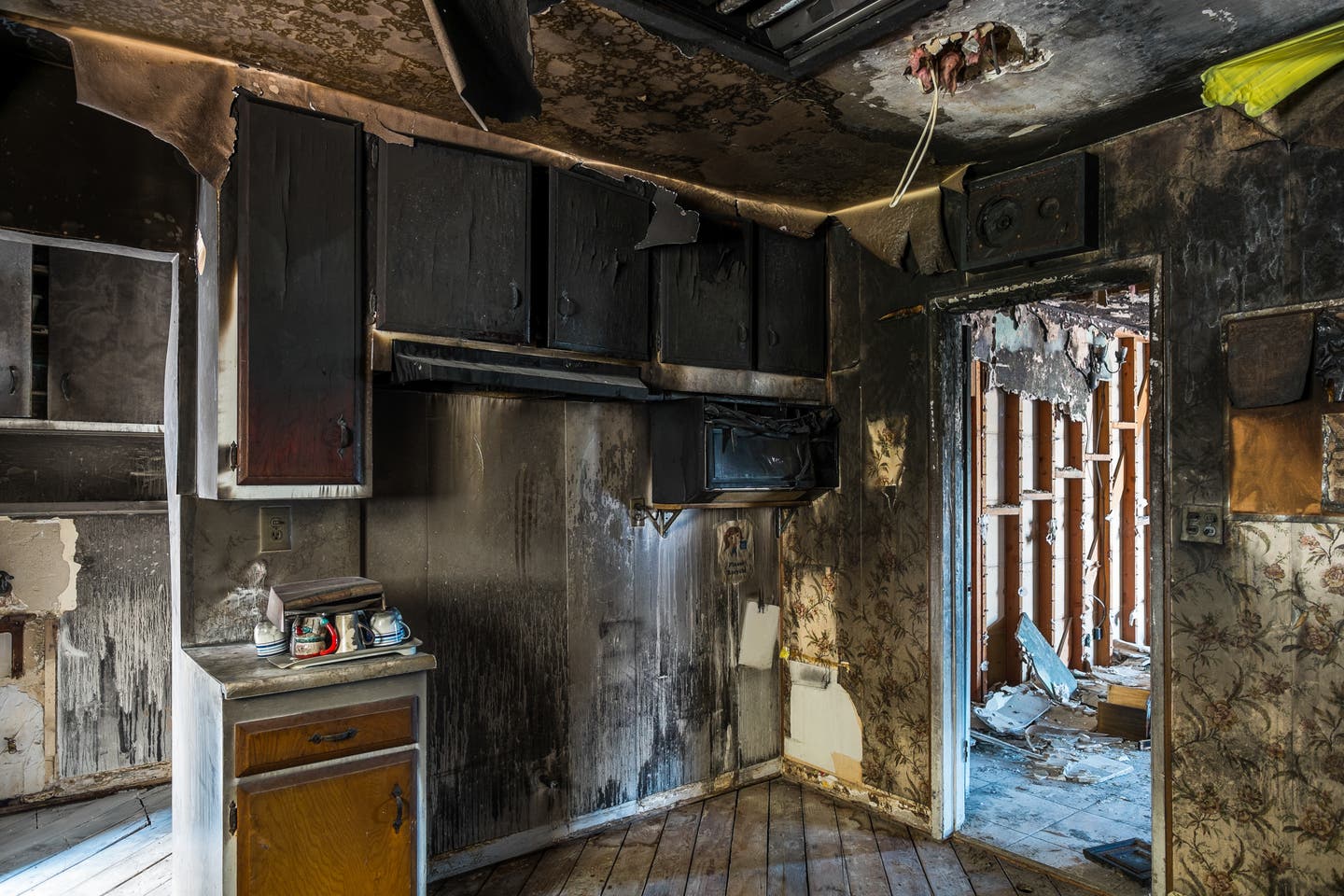
Our physical documentation maps the heat exposure zone on the roof: the membrane area with visible char, melt, or delamination from heat; the transition zone between heat-affected and unaffected membrane; and the area where suppression water discharge affected adjacent membrane or equipment. Suppression water from CCFD fire operations can damage roofing and rooftop equipment beyond the direct fire exposure zone — soaked insulation from suppression water is documented separately from fire-exposure insulation damage and attributed to the suppression activity in the scope.
We document rooftop equipment damage as part of the scope when equipment failure was part of the fire chain, and we coordinate with the building's HVAC and electrical contractors on scope sequencing. A membrane fire that originates from an equipment malfunction requires the equipment to be remediated or replaced before permanent membrane repair is viable — we flag that dependency in the repair scope and note the coordination requirement.
Repair Sequencing for Las Vegas Fire-Damaged Commercial Roofs
Temporary stabilization after a Las Vegas commercial roof fire requires confirming structural deck integrity before any crew accesses the fire zone. Fire damage that reached the metal deck may have reduced deck strength in the heat-affected zone. We perform a ground-level visual assessment of the structural wall and deck condition from below before we walk a fire-affected roof, and we flag areas that require structural engineering review before roof-level access.
Permanent membrane repair in a fire-damaged zone requires removal of all charred, melted, and heat-affected membrane and insulation to confirmed unaffected boundaries. We do not patch over heat-affected membrane — the thermal and chemical changes in heat-affected TPO or modified bitumen produce brittleness that will fail under the next Las Vegas thermal cycling season regardless of the quality of the patch applied over it. The repair boundary is set at material that passes physical integrity testing, not at the visible char line.
Penetration flashing replacement in the fire zone is included in the repair scope. Heat exposure to penetration flashings — even below the membrane char threshold — degrades the flashing sealant, warps metal components, and compromises the pitch-pan fill. We replace all penetration details within the heat-affected zone as a standard part of fire-damage repair. We do not attempt to reseal heat-affected flashings.
Frequently asked questions
The fire was contained to the equipment — is the membrane still okay?
Possibly, but not automatically. Heat from equipment fires can transfer to adjacent membrane even when there is no visible char. We inspect the membrane in a radius around the fire zone for heat-distortion signs — bubbling, surface texture change, delamination of the membrane-to-insulation bond — and for chemical contamination from suppression agents. The inspection determines the actual affected zone, which may be larger or smaller than the visible fire boundary.
How long after a fire can we wait to do repairs?
Fire-damaged membrane should be assessed and temporarily stabilized as soon as the Clark County Fire Department clears the building for access. An open or compromised roof after a fire is a weather-intrusion risk regardless of Las Vegas's dry climate — and a monsoon event on a fire-damaged roof produces compound damage that complicates the insurance scope. We recommend emergency dry-in within 48 hours of fire department clearance.
Can you document the fire damage for our Nevada commercial property carrier?
Yes. We produce a scope package that includes the CCFD incident report reference, zone-level membrane damage documentation with GPS-tagged photo log, insulation saturation mapping from suppression water, and a repair-vs-replace recommendation by zone. We produce documentation in the format the carrier's adjusters require.
Fire damage to a Las Vegas commercial roof?
We assess structural access safety, document the heat-affected zone and suppression water extent, and produce a repair scope for your Nevada carrier. Emergency dry-in within 48 hours of fire department clearance.