Energy Roofing
Documented roof planning for energy roofing across Las Vegas commercial facilities.
Electrical Clearance Coordination on Energy Facilities
Electrical clearance is the first topic on any energy sector roofing pre-construction discussion. Overhead high-voltage conductors, transmission lines, and distribution infrastructure at substation-adjacent facilities require documented safe clearance distances for crane operations, scaffold deployment, and any elevated work platform. OSHA 29 CFR 1926.1408 establishes minimum approach distances for crane operation near power lines, and NV Energy's utility-specific clearance requirements may exceed those minimums in certain operating conditions. We obtain the applicable clearance documentation and, where required, request an NV Energy field inspection before any crane is positioned.
Substation buildings at NV Energy facilities present specific coordination requirements around the electrical switchgear, transformer vaults, and bus work that the building encloses or is immediately adjacent to. Rooftop work that creates vibration, dust intrusion, or moisture risk in proximity to energized electrical equipment requires formal coordination with NV Energy's operations team — not just the facilities team — because the equipment serves the transmission grid. We do not begin work in proximity to substation equipment without written coordination approval from the utility's operations group.
Grounding and bonding requirements for roofing work near electrical infrastructure exceed what standard commercial construction safety plans address. On energy-sector facilities, we develop a site-specific safety plan that addresses grounding for metal tools and equipment in proximity to energized systems, the use of non-conductive ladders and scaffolding where required, and the communication protocol between the roofing crew and the facility's electrical safety officer.
Operations-Continuity Requirements for Utility Facilities
NV Energy's transmission and distribution operations cannot tolerate unplanned outages caused by contractor activity. The utility's operations centers and control facilities are staffed continuously. Rooftop work above control room spaces, energy management system infrastructure, or SCADA equipment requires the same pre-production documentation and change-management process that we apply on data center projects — scope description, risk assessment by zone, rollback plan for any penetration work that encounters unexpected conditions, and the contact chain for after-hours events.
Reliability-critical facilities within NV Energy's Clark County portfolio — substations that serve the Strip corridor's continuous load, transmission switching stations whose outage would affect many regional commercial buildings — carry zero tolerance for roofing-caused electrical events. We identify reliability-critical buildings during the pre-construction qualification process and apply our most conservative sequencing and penetration protocols to those facilities as a matter of standing policy.
The Las Vegas Valley's extreme summer heat creates an additional dimension for utility facility roofing. NV Energy's transmission and distribution system operates at or near peak load during July and August when air conditioning loads across Clark County are at their maximum. Rooftop work that reduces insulation performance or temporarily removes membrane sections during peak load periods can increase heat gain into spaces where electrical equipment has thermal operating limits. We coordinate the production schedule for summer work on NV Energy facilities with the utility's engineering team to avoid creating heat-gain events in thermally sensitive equipment rooms.
Renewable Energy Infrastructure and Solar Coordination
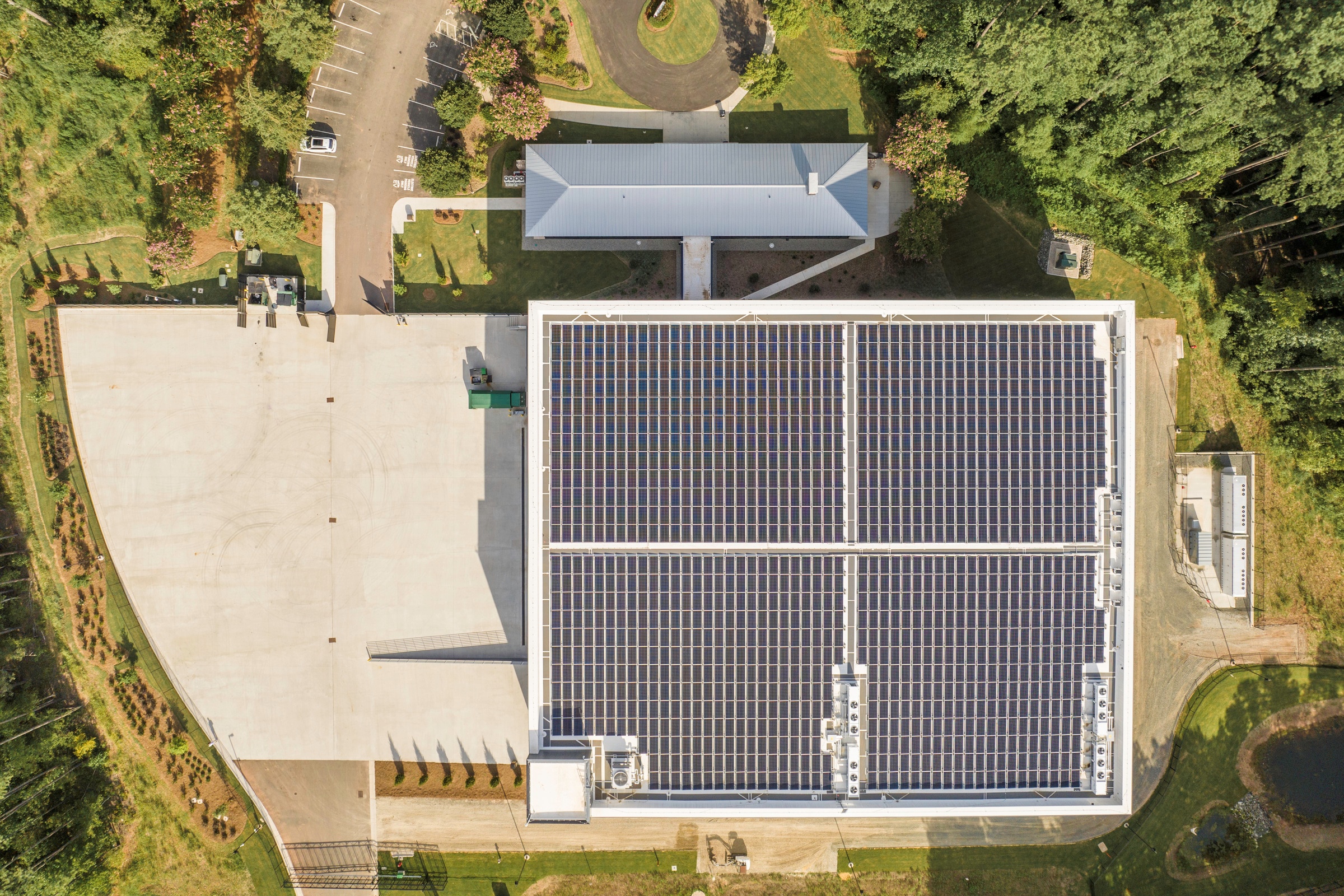
Nevada's renewable energy portfolio has grown significantly in the Las Vegas area, with NV Energy procuring solar capacity from utility-scale projects in the Moapa and Boulder City corridors and with commercial building owners across the metro adding rooftop solar arrays. A commercial roof replacement that involves an existing rooftop solar installation requires coordination with the solar system operator — array de-energization, racking removal, module storage, and re-installation sequence must be planned with the solar contractor and incorporated into the roofing project schedule.
We work with solar contractors on rooftop solar removal and reinstallation as part of the roofing scope on buildings where existing arrays require relocation for the membrane replacement. The roof-solar interface — the penetrations and ballast detail where racking systems mount to or bear on the roofing membrane — is a frequent source of membrane damage on aging rooftop solar installations. We document the racking penetration condition and specify an appropriate flashing detail for the reinstalled racking that eliminates the concentrated membrane stress that rack-foot detail failures create.
New construction that incorporates rooftop solar from initial occupancy presents a different coordination requirement: the roofing membrane must be compatible with the solar racking system's mounting method, and the membrane warranty must not be voided by the racking installation. We review solar racking specifications and confirm membrane-warranty compatibility before solar systems are installed on projects where we are the roofing contractor of record. This coordination is documented in the project closeout file as part of the warranty compliance record.
Frequently asked questions
How do you handle electrical clearance requirements for crane operations near NV Energy infrastructure?
We obtain the applicable OSHA 29 CFR 1926.1408 clearance documentation and, where NV Energy's utility-specific requirements apply, request an NV Energy field inspection before any crane is positioned. Crane placement plans for utility-adjacent sites are reviewed against the clearance requirements before mobilization. We do not position equipment near energized infrastructure without written clearance documentation in hand.
Can you work on NV Energy substation buildings without interrupting power distribution operations?
Yes, but it requires formal coordination with NV Energy's operations group — not just the facilities team — because substation equipment serves the transmission grid. We obtain written coordination approval from the utility's operations group before beginning any work in proximity to energized substation equipment. Scope elements that require operational impacts are identified in pre-construction and scheduled through the utility's formal outage coordination process.
How do you handle an existing rooftop solar array during a membrane replacement?
We coordinate with the solar system operator and contractor for array de-energization, module removal, and module storage before the membrane replacement begins. The re-installation sequence is incorporated into the roofing project schedule so that the solar contractor can reinstall on the new membrane before substantial completion. We document the racking penetration details and specify flashing that eliminates the concentrated membrane stress that standard rack-foot details can create.
Do you work on data center power infrastructure buildings like Switch Las Vegas?
Yes. Switch Las Vegas facilities involve both data-center uptime protocols — We apply our full data-center protocol and our energy-sector electrical safety planning to Switch and comparable high-power-density facilities. Pre-construction coordination with both the facilities and operations teams is required before mobilization.
Energy sector facility roof scope in Las Vegas?
Our project managers will coordinate electrical clearance requirements, document operations-continuity constraints, and produce a written scope that accounts for the safety and reliability requirements of your energy infrastructure facility.