
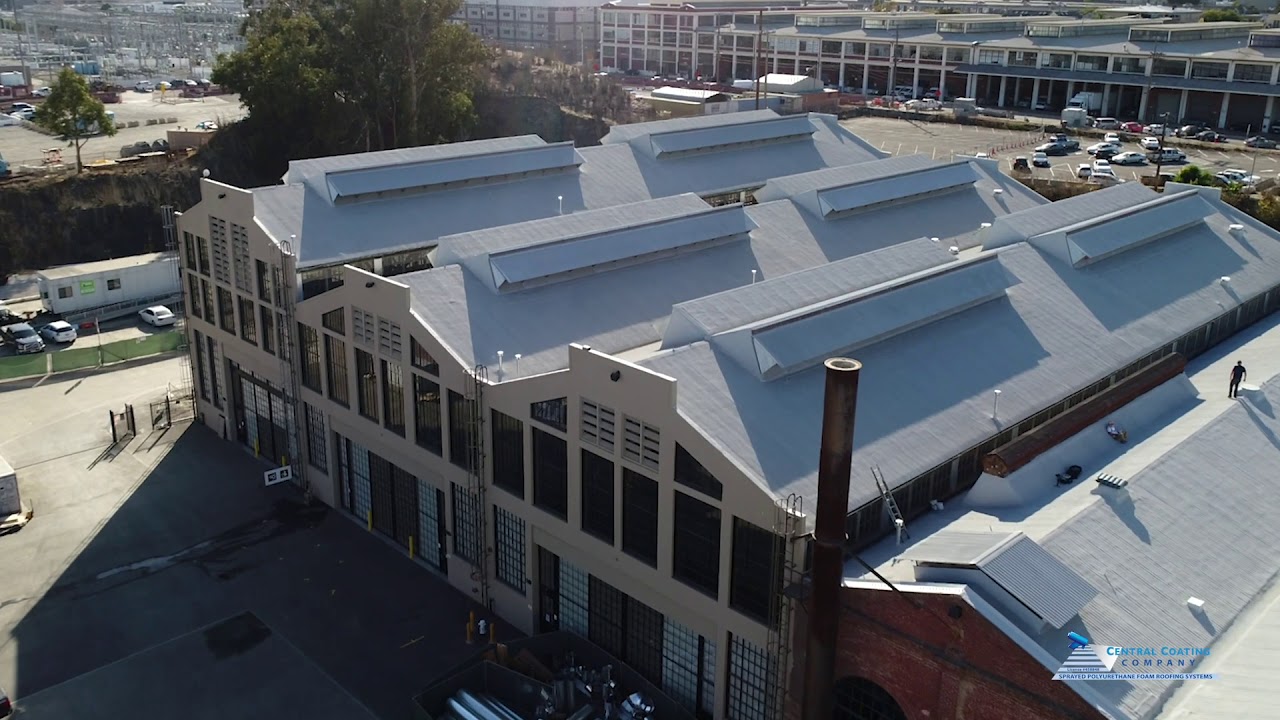
Car Wash Facility Roofing
Documented roof planning for car wash facility roofing across Las Vegas commercial facilities.
Why a car wash roof in Las Vegas fails from the inside out
A car wash is one of the few commercial buildings where the roof is attacked from below as hard as it is from above. Every cycle pushes a warm fog of water, detergent, presoak, tire shine, and drying-agent vapor up against the underside of the deck. In a city where outside temperatures swing past 110 degrees in July and the structure stays sealed against the heat, that vapor condenses on the cooler steel deck and fastener heads overnight. We have opened up tunnel roofs along Boulder Highway and out toward Centennial Hills where the membrane on top looked fine, but the deck flutes and the screws holding the insulation down were rusted to lace. That is the pattern that defines this property type, and it is the reason a generic flat-roof spec does not protect a wash for very long.
We work this building from the inside condition first. Before we talk membrane, we want to know what your tunnel actually does to the air above the cars: how many cars an hour, what is in the chemical menu, whether the dryers dump heat into the bay, and how the existing exhaust handles it. Those answers tell us whether the deck is salvageable, whether the fasteners need a corrosion-rated coating, and whether a vapor retarder belongs in the assembly. A wash on Rainbow Boulevard running a heavy ceramic-coat package has a very different problem than a self-serve bay operation off Nellis.
Las Vegas drives a lot of cars through a lot of washes
This is a strong car wash market and it keeps getting stronger. The valley adds tens of thousands of residents a year, the desert coats every vehicle in dust and the fine grit that blows in off the Mojave, and locals wash often to keep that film off the paint. Express tunnels have multiplied along the Boulder Highway corridor, the Rainbow and Decatur arterials, the Eastern Avenue stretch through Henderson, and the newer rooftops in the northwest around Centennial and Skye Canyon. Tourists in rental fleets and the rideshare drivers feeding the Strip add a second layer of volume that most metros do not have. The upshot for an owner is simple: your tunnel rarely gets a long quiet stretch to take a roof offline, so the work has to be planned around the wash, not the other way around.
The roof zones we treat separately
A car wash is not one roof. It is three or four small roofs with different jobs, and lumping them under one spec is how owners end up with chronic leaks.
- The tunnel or wash bay. The highest-humidity, highest-chemical zone on the property. This is where we push hardest on membrane chemistry and on protecting the deck and fasteners underneath.
- The equipment and pump room. Reclaim tanks, blowers, and chemical totes live here. Penetrations are dense and the room runs warm and damp.
- The retail or office cap. The lobby, restrooms, and any leased space. A standard low-slope roof, but its drainage usually ties into the bay roof, so we detail the transition carefully.
- The vacuum and pay canopies. Out in the open, hammered by Las Vegas UV and overspray drifting off the dryers, and almost always the first thing to leak at the column-to-canopy connection.
What we specify and why
For the tunnel and bay we lean toward PVC membrane. Its chemistry stands up to the alkaline detergents and the warm chemical mist better than standard TPO or EPDM over the long run, and welded PVC seams give us a watertight assembly that does not depend on tape or adhesive that the vapor can work loose. We confirm with the manufacturer that the specific chemical program at your wash is inside their warranty, because most single-ply warranties carve out chemical exposure unless it is addressed up front. Underneath, we look hard at the deck and at corrosion-resistant fasteners and plates, since that hidden layer is what actually fails on a wash.
We address the warm, wet air directly rather than just covering it. That can mean a vapor retarder positioned for the way heat and moisture move in a sealed desert building, oversized and properly flashed curbs on the steam and dryer exhaust fans, and drainage that clears water fast instead of letting it pond and bake on a dark roof. On the canopies we favor a clean metal or single-ply detail with reworked column flashings and tightened gutter-to-downspout connections, because that joint is the one we get called back to most.
Working around an operating wash
Most Las Vegas washes run seven days a week, and the busy stretches are weekend mornings and the hours right after a dust storm rolls through. We schedule tunnel work into your slow windows or an early-morning closure, keep the retail side open with the crew and materials staged clear of the customer path, and dry in every section we open before we leave for the day. Monsoon afternoons in July through September can drop heavy rain on short notice, so we watch the forecast and size each day's tear-off to what we can close before the sky opens. The goal is a roof that is done right without a string of lost wash days to get there.
Questions Las Vegas car wash owners ask
Why not just put the same TPO my contractor uses on strip centers?
Because a strip center roof is not sitting over a chemical fog all day. Standard TPO can soften and degrade where detergent and drying-agent vapor concentrate, and the warranty usually excludes that exposure. PVC is the more defensible choice over an active tunnel, with the chemical program confirmed against the manufacturer's resistance data before we install.
My roof looks fine but my screws and deck are rusting. Why?
That is the classic car wash failure. Warm, chemical-laden vapor rises, hits the cooler deck and the metal fasteners overnight, and condenses there. The corrosion happens from the inside with no visible surface leak until the attachment is already compromised. We check fastener pull and deck condition during the inspection and address the vapor, not just the top surface.
Can you reroof the tunnel without shutting the wash down for a week?
In most cases yes. We phase the tunnel into sections, use your slow hours or a short morning closure, and keep the retail and vacuum areas live. We give you a written day-by-day sequence before we start so you can see exactly which hours are affected.
The vacuum canopy keeps leaking at the posts. Is that a roof problem?
It is, and it is the most common one we see on Las Vegas washes. The column-to-canopy flashing and the canopy drainage take constant UV and overspray and work loose over time. We rebuild those connections and the gutter-to-downspout joints as their own scope item.