
Restaurant Roofing
Documented roof planning for restaurant roofing across Las Vegas commercial facilities.
Grease Exhaust and Kitchen Ventilation Flashing
The most technically specific aspect of restaurant roofing in Las Vegas is the interface between commercial kitchen exhaust systems and the roof membrane. Type I hood exhaust stacks — grease-laden air exhausting from fryers, ranges, and cooking lines — discharge grease aerosol onto the membrane surface around the stack collar. Over time, this grease accumulation softens standard TPO membrane and degrades the collar flashing seal. The correct specification for the membrane zone within approximately 18 inches of an active Type I exhaust collar is PVC with a stainless steel pitch pocket or manufactured curb with grease-rated collar gasket, not standard TPO lapped over a generic stack collar. We specify this detail on every restaurant roofing project and we replace the detail as part of every restaurant reroof scope, not as an optional add-on.
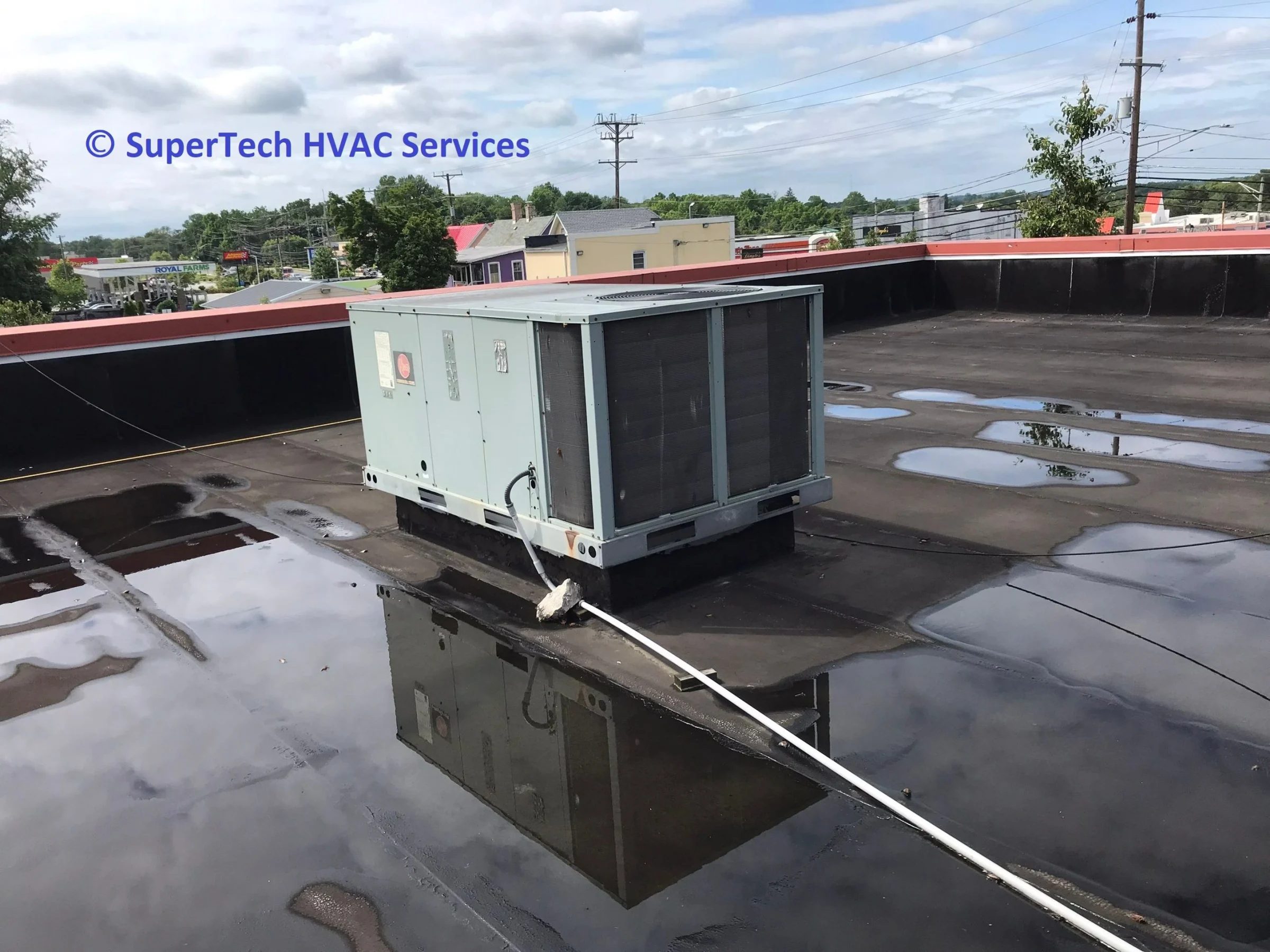
Makeup air units and exhaust fans that are part of the kitchen ventilation system create additional rooftop equipment density on restaurant buildings relative to non-food-service commercial. The curb flashings at makeup air units — which are typically larger and heavier than standard HVAC equipment — carry the same daily thermal cycling stress as any other flashing in the Mojave Desert climate, with the added factor that the makeup air stream heats the curb collar above ambient on hot days and the grease-laden exhaust from adjacent stacks deposits on nearby flashing surfaces. We document all kitchen ventilation equipment during the pre-construction walk and include curb flashing rebuild in the scope for every unit, not just the units with visible deterioration.
Restaurant roofs in the Chinatown Spring Mountain corridor frequently have multiple exhaust systems — some buildings house two to three individual restaurant tenants, each with independent kitchen exhaust stacks in a shared roof space. The cumulative grease load on a building with three active commercial kitchens discharging through a common roof section over 10-15 years can produce membrane deterioration extending well beyond the immediate collar zone. We assess grease exposure extent during the inspection walk and flag the actual affected area for membrane replacement, rather than scoping only the visible collar damage.
Scheduling Around Las Vegas Restaurant Operating Hours
Restaurant roofing scheduling in Las Vegas is constrained by the city's extended-hours culture. Independent restaurants in the Chinatown corridor and the 18b Arts District routinely operate until midnight or later, with prep operations beginning by 9-10 AM. Practical early-morning production windows — before prep begins — run roughly 5 AM to 9 AM in these corridors, which limits daily production hours on active restaurant buildings. We adjust crew start times to capture these windows and phase daily scope around the restaurant's opening preparation schedule.
Strip resort food and beverage facilities are essentially unavailable for daytime roofing work without significant operational disruption — 24-hour casino operations mean that the restaurant kitchen below may be operational at any hour. Production on Strip F&B facilities occurs in negotiated overnight windows coordinated with the resort's facilities management and food and beverage operations teams. In some cases, strip resort restaurant roofing is scoped as part of a larger resort building reroof project where the resort's existing overnight production protocol already covers the F&B roof zone.
Freestanding QSR and casual dining outparcels in Summerlin and Henderson master-planned retail centers have more workable scheduling options — most close by 10-11 PM and have less sensitive operations relative to a full-service kitchen. Early-morning production (5-9 AM) before the breakfast rush and evening work after the dinner rush are both viable windows on these properties. We confirm hours of operation with the restaurant manager during pre-construction and build the daily schedule around actual operating hours, not generic restaurant scheduling assumptions.
Adaptive Reuse Restaurant Buildings in Downtown and Arts District
The 18b Arts District and Fremont East restaurant buildings occupy a mix of mid-century commercial structures, former warehouses, and 1970s-1980s strip retail that was not designed for the mechanical loads of a full-service restaurant. Adding a commercial kitchen to an older building typically involves penetrating the existing roof for new exhaust stacks, makeup air units, and refrigeration condensers — sometimes in a building whose existing membrane has not been assessed for condition since the new equipment was installed. These buildings often have layer-on-layer roof situations: original built-up roofing, a 1990s modified bitumen recover, and then the most recent TPO or silicone coat applied over everything.
We assess adaptive reuse restaurant buildings with core pulls at representative locations to determine what is in the roof assembly before specifying a scope. A restaurant building that was converted from a retail space in 2018 and had a silicone coat applied at that time may have wet insulation under the silicone from pre-conversion leaks that were never addressed. The silicone coating masks the wet area visually. A moisture survey — cores or infrared — before scope writing is the standard for any adaptive reuse restaurant building with a complex roof history.
Frequently asked questions
Why does grease from kitchen exhaust damage roofing membranes?
Type I kitchen exhaust discharges grease aerosol that accumulates on the membrane surface around the exhaust collar. Over time, grease softens TPO membrane and degrades the collar flashing seal — the membrane zone around an active exhaust collar that has not been maintained can become tacky, delaminated, or perforated in 5-7 years. The correct specification at exhaust collar locations is PVC with a grease-rated collar detail, not standard TPO lapped over a generic collar.
Can you work on restaurants that operate late into the night?
Yes. For late-night restaurants in the Chinatown Spring Mountain corridor and downtown Arts District, we schedule production in early morning windows before prep operations begin — typically 5 AM to 9 AM. Strip resort F&B facilities require overnight production windows coordinated with the resort's facilities team. We confirm operating hours with each restaurant operator before developing the production schedule.
What do you find in older restaurant buildings in the 18b Arts District?
Adaptive reuse restaurant buildings in the Arts District and Fremont East frequently have multiple roof layers — original built-up roofing, subsequent modified bitumen or TPO recovers — with wet insulation under the surface membrane from pre-conversion leaks that were never fully remediated. We conduct core pulls and moisture assessment on these buildings before writing any scope. A scope written without knowing what is under the top layer is not an honest scope.
Do you handle the full exhaust penetration rebuild as part of a restaurant reroof?
Yes. Every active Type I exhaust stack collar, makeup air unit curb, and kitchen ventilation penetration is rebuilt as part of our restaurant replacement scope — grease-rated PVC flashing at exhaust collars, curb rebuild at makeup air units, and documented condition assessment of every penetration in the pre-construction walk. These details are in the base scope, not in an allowance or a separate line item.
Get a restaurant roof scope for your Las Vegas food and beverage property.
We will walk the roof and document all kitchen exhaust penetrations, grease exposure extent, and operating hour constraints, then produce a written scope with grease-rated flashing details and a production schedule that works around your service hours.