
School Roofing
Documented roof planning for school roofing across Las Vegas commercial facilities.
CCSD Campus Roofing: Scale, Procurement, and Scheduling
Clark County School District's capital program for roofing follows Nevada public procurement requirements: competitive bid solicitation, prevailing wage compliance under Nevada's Little Davis-Bacon Act, and bid documentation that includes bonding, insurance, license verification, and in some cases pre-qualification requirements. We participate in CCSD procurement processes and maintain all documentation — C-15a license, prevailing wage certifications, bid bond capacity, and insurance certificates — at the levels the district requires. The district's facilities management staff evaluates bids on both price and contractor qualification, and a track record of completed school roofing within the Clark County jurisdiction is relevant to that evaluation.
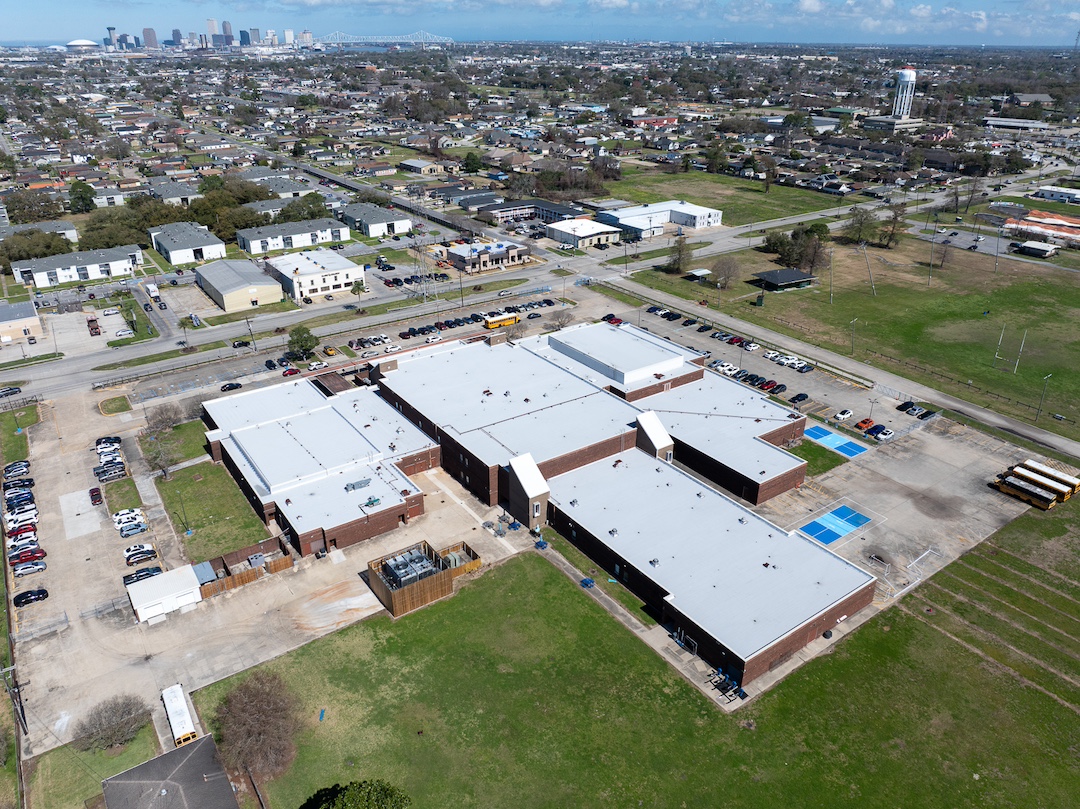
Summer scheduling on CCSD campuses is managed against the district's academic calendar. The standard summer window runs approximately late May through early August — roughly 10 weeks. A high school campus with 200,000 sq ft of roof across multiple building clusters requires production planning that prioritizes the highest-need buildings in the first weeks of the window, maintains daily progress against the schedule, and achieves substantial completion before the district's pre-opening facilities inspection in late July or early August. We submit a written zone-by-zone production schedule with the bid that documents how each building on the campus will be completed within the summer window.
Background check requirements for contractor personnel on CCSD campuses are administered through the district's background check program. All workers who will have unsupervised access to campus must complete and pass the district's required check before stepping on campus. We initiate background check submissions for our crew well in advance of the project start date — not in the week before mobilization. The district's pre-production orientation for contractors establishes campus access protocols, prohibited zones, and safety requirements that we review with our project manager and crew supervisors before the first production day.
UNLV and Higher Education Campus Roofing
The University of Nevada Las Vegas campus is a substantial roofing account with building vintages spanning from 1950s original construction through current active construction projects adjacent to Allegiant Stadium. Older campus buildings — the original academic quadrangle along Harmon Avenue — carry built-up roofing and early modified bitumen systems that are beyond normal service life. The 2000s-2010s campus expansion buildings are in active first-replacement cycles. The newest facilities — the medical education building, the expanded Stan Fulton Athletic Center complex — are in initial warranty periods.
UNLV procurement operates under the Nevada System of Higher Education (NSHE) purchasing regulations, which are distinct from the CCSD process but similarly governed by public contracting requirements. Prevailing wage compliance, bid bond requirements, and contractor pre-qualification standards apply. The UNLV facilities management office coordinates roofing projects around the academic calendar — summer window scheduling is preferred for occupied academic buildings, with some flexibility for buildings in the research or administrative category that have more flexible access schedules.
College of Southern Nevada's Charleston, Henderson, and North Las Vegas campuses each have their own facilities management contacts within the CSN system. The building inventory across the three campuses includes structures built between the 1970s and 2010s — a wide vintage range that produces roofing needs at different lifecycle stages on each campus. CSN procurement follows NSHE requirements consistent with UNLV.
Occupied School Roofing Protocols
When CCSD scheduling or program needs require roofing work on an occupied school campus during the academic year — emergency repairs, urgent leak response, or projects that cannot be deferred to the summer window — the occupied-campus protocols apply. Student areas, administrative corridors, and gymnasium spaces have restricted contractor access during school hours. Materials staging cannot obstruct student circulation paths, emergency egress, or bus loading zones. Tear-off operations that generate debris, noise, or odor require coordination with the principal and facilities contact to identify acceptable production windows and affected areas.
Emergency leak response on CCSD campuses during the school year is handled on a priority basis. Classroom flooding during a monsoon event is not a deferred-maintenance situation — it is an immediate dry-in and assessment call. We respond to emergency calls on CCSD campuses and coordinate access protocols with the district's facilities emergency line. Temporary dry-in to protect classroom space is our first response, followed by documented assessment and permanent repair scope.
Frequently asked questions
Are you familiar with CCSD's procurement and prevailing wage requirements?
Yes. We participate in Clark County School District competitive bid processes and maintain prevailing wage certifications, bid bond capacity, C-15a license verification, and insurance certificates at the levels CCSD requires. We are familiar with the district's procurement calendar and position ourselves in the bid process with enough lead time to
How do you manage background check requirements for school campus work?
We initiate background check submissions for all crew members assigned to CCSD and higher education campus projects well in advance of mobilization — typically 3-4 weeks before the planned project start date. No worker is on campus without cleared background check status. We track individual worker status and have contingency plans for projects where a crew member's check is delayed.
Can you complete a high school campus reroof within the CCSD summer window?
Yes, with proper pre-construction planning. A high school campus of 150,000-250,000 sq ft across multiple buildings requires a zone-by-zone production schedule that prioritizes buildings by need, maintains daily section targets, and achieves substantial completion before the district's pre-opening inspection. We submit the written production schedule with the bid — not after contract award.
What happens if a CCSD school needs emergency roof repair during the school year?
Emergency dry-in response during the academic year is available for documented emergency conditions — active leaking into classroom or administrative space. We coordinate access with the district's facilities emergency line and the school principal, work within occupied-campus protocols, and produce a temporary dry-in that protects the building while we scope the permanent repair. We do not defer classroom water intrusion events.
Get a school or campus roof scope for your Las Vegas educational facility.
Whether you manage a CCSD school, a UNLV building, or a CSN campus, our project managers will walk the roof, document condition, and produce a bid-ready scope with summer-window production schedule and public procurement documentation.