Cool Roof Systems
A practical review of where cool roof systems fit the building, budget, and Las Vegas roof conditions.
ASHRAE 90.1-2019 SRI Requirements and Nevada Compliance
Nevada's adopted energy code (ASHRAE 90.1-2019 with NV amendments) establishes minimum SRI values for low-slope commercial roofs based on climate zone. Las Vegas sits in ASHRAE Climate Zone 3B — hot and dry — with SRI requirements that apply to all new construction and to replacement roofs that trigger code review. The specific threshold varies slightly by occupancy type and roof area, but standard white TPO, PVC, silicone-restored, and SPF-plus-silicone assemblies exceed the minimum on all standard commercial occupancy types without supplemental measures.
The permit process in Las Vegas, Henderson, and Clark County unincorporated territory requires energy code documentation at submission for commercial roofing replacements above the applicable threshold. We prepare the SRI documentation — manufacturer's tested SRI value, applicable code threshold, compliance confirmation — as part of every permit submission and include it in the closeout file. A building owner who later needs to demonstrate code compliance for a lender, insurer, or buyer has a clear documentation chain from the original permit through the closeout package.
Compliance documentation is also the basis for NV Energy rebate applications. The rebate program rewards installations that exceed the ASHRAE 90.1-2019 minimum by a qualifying margin — the incentive is structured to drive adoption above the code floor, not just at it. We assess rebate eligibility at project scope and select assembly specifications that maximize rebate value where doing so does not compromise the technical specification appropriate for the building's conditions.
NV Energy Commercial Cool-Roof Rebates
NV Energy's commercial cool-roof rebate program provides per-square-foot incentives for qualifying SRI-compliant installations on commercial buildings in their service territory, which covers Las Vegas, Henderson, North Las Vegas, Clark County unincorporated areas, and most of the Nevada communities where commercial roofing projects are concentrated. The rebate is a direct payment to the building owner or, in some program structures, to the contractor on the owner's behalf — not a tax credit or future bill offset.
Rebate amounts change with annual program cycles, and available budget is finite in any given program year. We confirm current rebate availability, per-square-foot amounts, and application deadlines at project scope — the rebate calculation is part of the capital cost analysis we produce for any qualifying cool-roof project. For large commercial buildings — 50,000 sq ft or more — the rebate value is a meaningful line item in the project economics.
The documentation required for NV Energy rebate submission includes the product specification with tested SRI value, the contractor's license number, the building's NV Energy account number, and post-installation confirmation of the installed system. We produce this documentation as part of the project closeout package and assist the building owner with rebate submission. Projects that close out without the required documentation face rebate application delays that we prevent by treating the documentation as a closeout deliverable from the first project scope meeting.
Cool-Roof Assembly Selection for Las Vegas Conditions
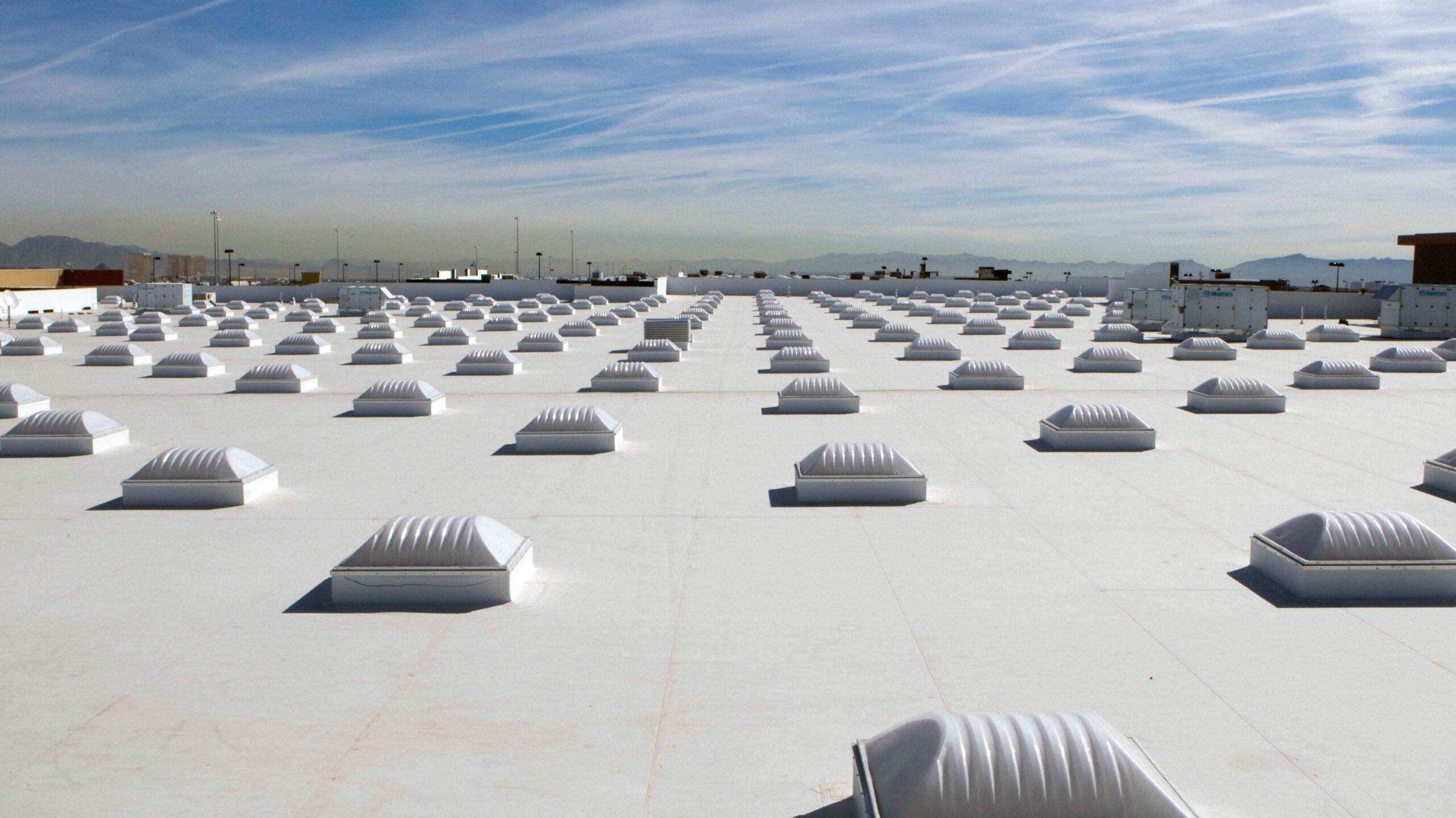
White TPO is the default cool-roof specification for Las Vegas commercial buildings without specific chemical exposure, structural, or drainage conditions that require a different membrane. It meets SRI requirements, carries 20-year NDL warranty paths from major manufacturers, welds reliably in Las Vegas's low-humidity air, and is the volume membrane in the Clark County market with strong manufacturer field rep support. For most owners doing a standard flat commercial roof replacement, white 60-mil TPO is the starting specification.
Silicone fluid-applied restoration is the preferred cool-roof path for buildings with qualifying existing substrates. The no-tear-off economics — preserving existing insulation R-value, eliminating tear-off disposal cost, reducing project duration — make silicone restoration the most capital-efficient cool-roof upgrade available for aging single-ply and modified bitumen roofs that pass the adhesion and moisture qualification tests. In Las Vegas's large aging-commercial inventory, silicone restoration is performing work that full replacement would do in other markets — and doing it at significantly lower cost per square foot.
SPF with white silicone topcoat is the specification for buildings where insulation deficiency and membrane replacement must be addressed simultaneously and where the seamless design is valued for Las Vegas's thermal-cycling environment. Standing seam metal with light Kynar finish is the long-lifecycle specification for architectural buildings and institutional owners whose capital planning horizon justifies the premium. PVC is the specification where chemical exposure or chronic ponding makes it the technically correct choice over TPO. The cool-roof requirement is met by all of these assemblies — the selection among them is driven by building-specific conditions, not by which membrane happens to be easiest to install.
Frequently asked questions
What is the SRI requirement for commercial roofs in Las Vegas?
Nevada's ASHRAE 90.1-2019 baseline establishes minimum SRI values for low-slope commercial roofs in Climate Zone 3B, which covers Las Vegas. The specific threshold varies by occupancy type and roof assembly. Standard white TPO, PVC, silicone restoration, and SPF-plus-silicone assemblies exceed the minimum on all standard commercial occupancy types. We document the specific applicable SRI threshold and the specified product's tested SRI value in every permit submission and closeout file.
How do I apply for NV Energy's cool-roof rebate?
The rebate application requires product specification with tested SRI value, contractor license number, building account number, and post-installation system confirmation. We produce the required documentation in the project closeout package and assist with rebate submission. Rebate amounts and program availability change with annual cycles — we confirm current parameters at project scope so the rebate value is included in the capital cost analysis from the start.
Does an existing dark roof need to be replaced to achieve cool-roof compliance?
Not necessarily. A silicone fluid-applied restoration coating over a qualifying existing membrane — including dark EPDM, weathered gray TPO, and modified bitumen — can convert the surface to SRI-compliant cool-roof status without tear-off. Qualification requires dry insulation and sound membrane adhesion, which we verify with core pulls and adhesion testing. If the substrate does not qualify for restore, full replacement with a compliant assembly is the path.
How much does cool-roof compliance reduce operating costs in Las Vegas?
The reduction in HVAC cooling load from a 45-55°F surface temperature decrease translates to measurable electricity savings at NV Energy commercial rates. The specific reduction depends on building insulation level, HVAC efficiency, the proportion of the roof area that is changed, and the cooling load profile of the specific building. We can reference published cool-roof energy modeling data for climate zone 3B, but we do not provide specific savings guarantees — the actual reduction depends on building-specific factors that vary.
Bring your Las Vegas commercial roof into cool-roof compliance.
We will assess your building's current membrane, confirm SRI compliance status, and produce a written scope for the compliant assembly that makes sense for your building's condition and capital position — with NV Energy rebate documentation and Nevada energy code compliance confirmation.