Mixed-Use Development Roofing in Las Vegas, NV
Commercial roofing for mixed-use buildings, urban infill developments, and live-work-play properties throughout Las Vegas, NV.
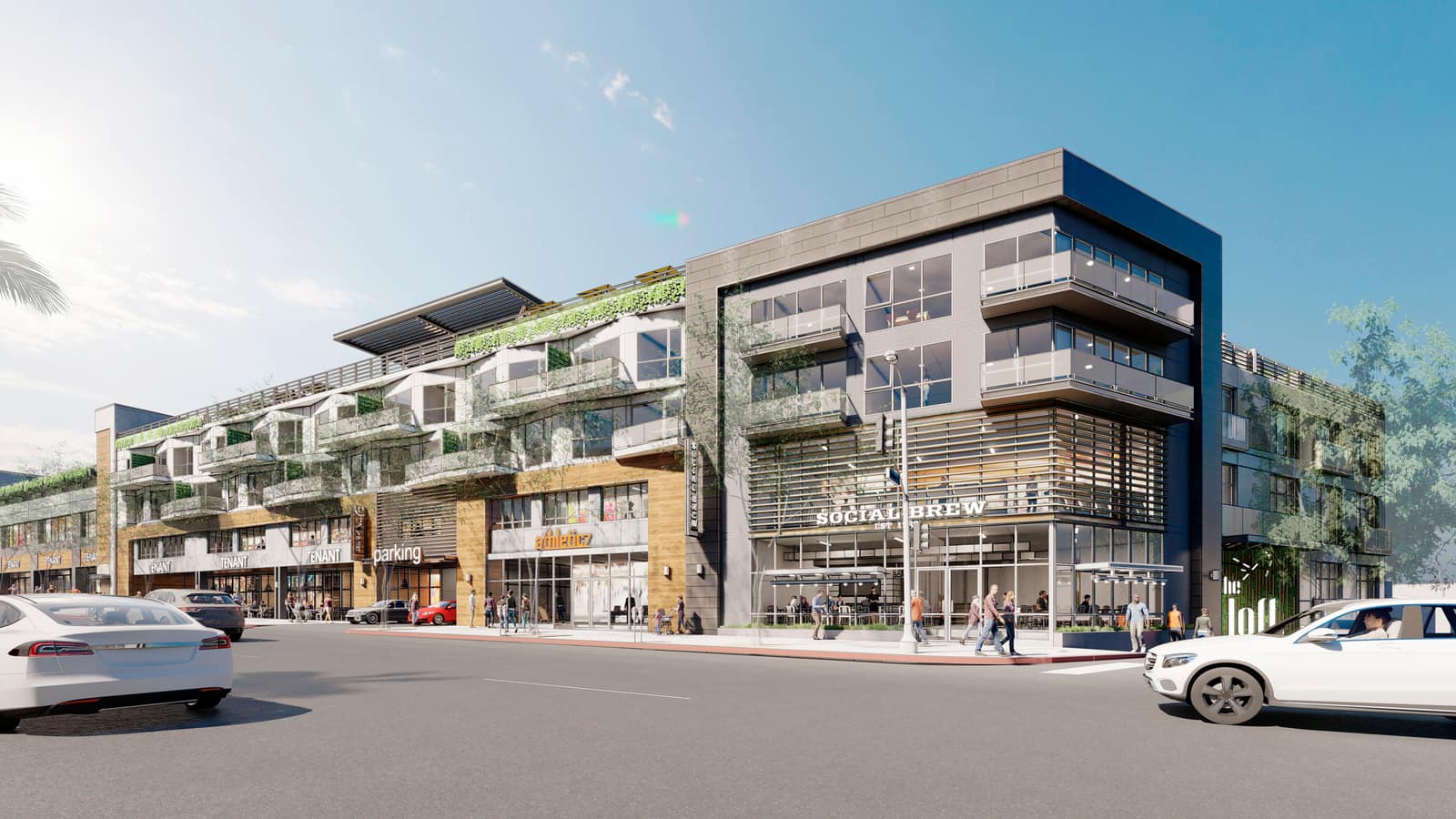
Las Vegas is building mixed-use density at a pace that would have seemed implausible two decades ago, driven by the Downtown Container Park's proof of concept, the Arts District's ongoing evolution along Casino Center Boulevard, and the emergence of Symphony Park as a transit-oriented district driven by the Smith Center and expanding toward City National Arena. Developer interest in the Medical District and the planned expansion of the Las Vegas Convention Center's surrounding blocks is adding mid-rise mixed-use inventory to a city long dominated by resort hospitality and suburban sprawl. These buildings—retail and restaurant base, residential or creative office above—present roofing challenges specific to the Mojave Desert's extreme thermal environment and its occasional but severe precipitation events.
Las Vegas roofing operates in one of the most thermally extreme environments in North America. Summer roof surface temperatures routinely exceed 170°F on dark membrane assemblies, and the diurnal temperature swing from daytime high to overnight low can exceed 40 degrees even in midsummer—a thermal cycling magnitude that exceeds what most Northern cold-climate markets experience across an entire year. This cycling concentrates stress at membrane laps, flashing terminations, and any point where two materials with different coefficients of thermal expansion are bonded together. We specify high-reflectance cool-roof membrane systems on all Las Vegas mixed-use projects, both to reduce surface temperatures toward the 120-130°F range achievable with white TPO or PVC and to satisfy Nevada's Title 24 energy code cool-roof requirements for commercial buildings.
Waterproofing at podium-deck transitions on Las Vegas mixed-use buildings faces a paradox: the desert climate creates years of minimal water exposure followed by intense monsoon events that can overwhelm a system that has dried out and contracted over the intervening dry season. The North American Monsoon brings Las Vegas its most dangerous rainfall—short-duration events with intensities that far exceed storm drain capacity and that arrive with minimal advance warning. We specify fully fluid-applied waterproofing membranes at podium decks rather than sheet-applied systems because fluid-applied materials maintain adhesion and flexibility across Las Vegas's extreme temperature range without the bridging failures that can affect sheet membranes after prolonged heat exposure.
Green roofs in Las Vegas require a fundamentally different approach than virtually any other market in the country. Extensive sedum assemblies designed for the Pacific Northwest or the Midwest will simply die during a Las Vegas August without irrigation, and the irrigation water consumption creates its own complications in a city operating under Colorado River allocation constraints and the Southern Nevada Water Authority's strict conservation requirements. We design Las Vegas green roofs using drought-adapted desert plantings—low-water succulents, native groundcovers, and decorative gravel zones that provide the thermal mass and stormwater retention benefits of vegetated assemblies without the water demand of traditional plant palettes. These assemblies can satisfy LEED credits and city sustainability requirements without creating an ongoing water budget liability for the building owner.
Rooftop amenity decks on Las Vegas mixed-use buildings are shaped by the reality that outdoor space is unusable for roughly five months of the year unless shaded and misted. Developers building in the Downtown and Arts District are specifying retractable shade structure systems, misting lines, and even small plunge pools on rooftop terraces to extend the usable season from May through October. Each of these features creates roofing penetration and waterproofing complexity: misting water lines, plunge pool drain pans, and shade structure post anchors all require flashing details engineered for Las Vegas's thermal cycling. We coordinate with the mechanical and structural designers to address these details during the design phase rather than receiving field-improvised penetrations after the roof membrane has been installed.
Multi-level rooflines on Las Vegas mixed-use projects often follow the setback requirements of the city's urban design standards, which mandate upper-floor stepbacks above a certain height to preserve street-level scale and solar access. These architectural setbacks create horizontal terraces at intermediate levels that function as occupied or semi-occupied roof spaces, each requiring a waterproofing assembly of its own. In the Downtown Summerlin and Town Square mixed-use formats, these terraces are specifically programmed as outdoor dining areas or tenant patios—meaning the waterproofing assembly must perform under foot traffic, furniture loads, and outdoor hospitality equipment while maintaining the fire-resistance ratings required by the occupancy below.
Fire-rated assemblies for Las Vegas mixed-use buildings follow Nevada's adoption of the IBC, but the city's building department has developed specific expectations around documentation and product approval that differ from other Nevada jurisdictions. Clark County's commercial plan check process requires listed assembly numbers from current UL or FM directories, not legacy assemblies that may have been acceptable under prior code editions. We maintain current memberships in both the UL Product iQ and FM Approval directories and can provide assembly documentation at permit submission that satisfies Clark County's plan check reviewers without the resubmittal cycles that slow project timelines in the city's active construction market.
Sound transmission in Las Vegas mixed-use buildings is complicated by the entertainment-oriented commercial tenants that prefer ground-floor locations: live music venues, late-night bars, and casino gaming floors generate sustained bass levels that travel through structural connections into residential units above regardless of what the architectural drawings show as the sound-rated partition assembly. The roof assembly's role in this acoustic chain is primarily at rooftop mechanical equipment—a restaurant's exhaust fan stack or a gaming floor's precision cooling system can introduce vibration into the structural deck if mounted on standard curbs. We specify high-deflection spring isolators for all equipment serving noise-sensitive mixed occupancies and provide vibration transmissibility calculations to the acoustic consultant on request.
Maintenance planning for Las Vegas mixed-use roofing must account for the unique degradation mechanisms of the desert environment: UV-driven membrane brittleness, thermal-cycling-induced lap seam separation, and dust accumulation that blankets drain sumps and reduces drain flow capacity. We offer annual maintenance programs that include drain cleaning scheduled after the monsoon season in September or October, UV-degradation assessments of exposed sealants and flashings at year three and year seven of membrane life, and infrared thermal scans of the insulation layer that can identify moisture intrusion from monsoon events before it causes structural damage. Building owners in the Symphony Park and Downtown Las Vegas districts who establish these programs at occupancy protect their investment against the accelerated degradation that the desert climate imposes.
Frequently asked questions
Is built-up roofing still installed new on Las Vegas commercial buildings?
Essentially no. New hot-asphalt BUR installation has been displaced in the Las Vegas market by single-ply membranes and fluid-applied systems that perform better in the Mojave Desert's temperature range and are more practical to install at 100°F+ ambient temperatures. We can specify and install BUR where a building's situation specifically requires it, but for virtually every Las Vegas commercial replacement or new installation, TPO, PVC, or silicone restoration is the honest recommendation.
My Las Vegas building has a gravel-surfaced BUR that has been patched repeatedly. Is it salvageable?
Possibly — but the condition of the plies beneath the gravel cap determines that answer, not the surface appearance or the patch history. A BUR that has been repeatedly patched at flashings or isolated field failures can still have dry, structurally sound plies across most of its area. Core cuts at representative locations will show whether the insulation is dry and the plies are intact. If the cores come back clean, a recover or coating system may extend the asset significantly. If the plies are saturated or delaminated, patching history is irrelevant — replacement is the scope.
How do you handle gravel removal during BUR tear-off on a Las Vegas building?
Gravel-surfaced BUR tear-off generates significant debris volume and requires rooftop vacuum equipment on buildings where waste disposal access is constrained — the resort corridor, downtown Las Vegas, and buildings with limited dumpster staging. We include gravel removal logistics in the pre-construction mobilization plan and coordinate disposal. The gravel is collected separately from membrane debris and can be directed to aggregate recycling facilities where the owner's sustainability program requires documented disposal.
Aging BUR on a Las Vegas commercial building?
We will walk the roof, pull core cuts, and produce a written assessment — replace or recover, with system options, installed cost estimates, and warranty paths appropriate to the Las Vegas market.
Ready to talk through a roof?
Tell us about the building and the roof problem. We'll document it and put a plan in writing — no pressure, no boilerplate.
Let's connect →