
Monsoon and Microburst Roof Damage Insurance Claims in Las Vegas
Monsoon season is when most Las Vegas commercial roof claims originate - and when documentation quality matters most.
The Valley's Signature Roof Peril
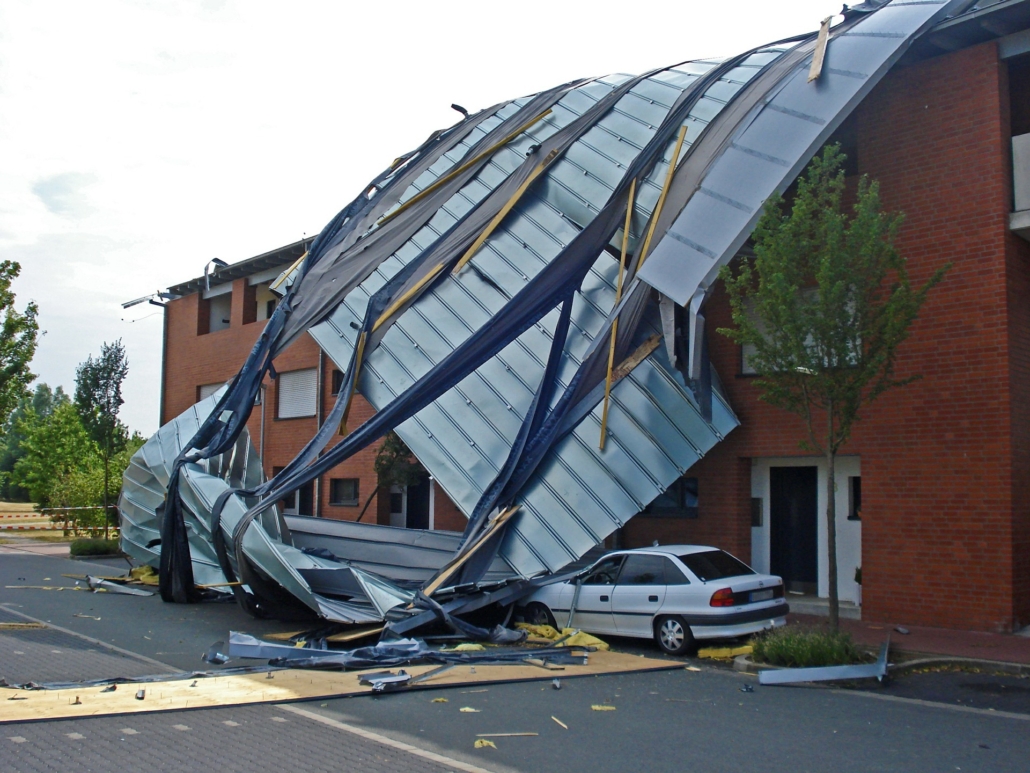
Las Vegas summers bring the North American monsoon - a pattern of moisture surging up from the Gulf of California that builds into afternoon and evening thunderstorm cells across Clark County from roughly July through September. These cells are localized and violent: a building on one side of the valley can take a direct hit while a property two miles away sees nothing. Wind gusts inside a monsoon cell regularly exceed straight-line thunderstorm wind, and outflow microbursts - sudden downdrafts that spread out at ground level in a radial pattern - are the specific mechanism behind most of the wind-driven roof damage we document during monsoon season. A microburst can put more concentrated force on a rooftop unit, parapet, or membrane edge in under a minute than a sustained windstorm produces over an hour.
The second half of the monsoon problem is rainfall intensity. A cell that drops an inch and a half of rain in forty-five minutes overwhelms drainage systems that handle normal desert rainfall without issue. On flat commercial roofs across the valley, that means ponding that exceeds the design capacity of scuppers and internal drains, especially where a drain is even partially obstructed by desert dust and debris that accumulates during the dry months leading into monsoon season.
Wind-Driven Membrane and Flashing Damage
Microburst outflow attacks a roof at the edges first. Perimeter membrane laps, edge metal, and coping caps take the direct load of the radial wind pattern, and on single-ply systems we frequently document membrane peeled back from the edge fastening pattern, displaced ballast on aggregate-surfaced systems, and rooftop unit curbs with flashing pulled loose at the corners. On SPF (spray polyurethane foam) roofs - common across North Las Vegas industrial buildings and the Speedway corridor - wind-driven debris impact and foam erosion at parapet returns are the damage patterns we document most often after a monsoon event.
We photograph the displacement pattern in detail because it is the physical evidence that ties the damage to a specific wind event rather than gradual wear. A membrane lap that failed under sudden outward wind load looks different from one that separated slowly through UV-driven adhesive breakdown, and our assessment documents which pattern is present.
Flash-Flood Ponding on Flat Roofs
Ponding damage claims require a different documentation approach than wind damage. We measure ponding depth and extent immediately following an event where possible, photograph drain and scupper conditions (including any obstruction found during clearing), and where interior water intrusion is reported, take moisture readings to map the affected insulation field. On resort-corridor and mixed-use properties with rooftop mechanical decks, we also document any ponding around curbs and equipment pads, since sustained ponding at those transitions is a common secondary leak source that shows up weeks after the storm event itself.
Documenting a Monsoon Claim
Timing matters. We prioritize post-monsoon-event roof walks and aim to be on site within 24 to 48 hours, because a documentation record dated close to a specific, publicly recorded weather event is stronger evidence than one produced weeks later. We cross-reference our inspection date against the storm date, photograph the full roof rather than only the reported problem area, and produce a written assessment that separates monsoon-event damage from any pre-existing roof condition. We're your roofing contractor, not a public adjuster - we document and substantiate the roof damage so you and your adjuster work from an accurate scope.
Frequently asked questions
When is monsoon season in Las Vegas?
Roughly July through September, with the most active cells typically arriving in mid-to-late summer. Storms are localized, so two buildings a short distance apart can have very different damage outcomes from the same afternoon.
What is a microburst and why does it matter for roof claims?
A microburst is a concentrated downdraft from a thunderstorm cell that spreads outward at ground level, producing wind speeds that can rival a low-end tornado in a localized area. It's the mechanism behind most sudden edge-metal, membrane-lap, and rooftop-unit damage we see after monsoon storms, and it typically leaves a distinct radial damage pattern we document as part of the assessment.
Is ponding water damage from a monsoon storm typically covered?
It depends on the cause. Ponding that results directly from a storm overwhelming a functioning drainage system is a different claim than chronic ponding from a long-standing drainage design deficiency. We document drain condition, ponding extent, and the storm's rainfall context so the cause is clear in the record.
Do you offer emergency response during active monsoon storms?
Yes. We dispatch for emergency dry-in and temporary protection across the Las Vegas valley when active leaking follows a monsoon event, and we document conditions as part of that response so the emergency work and the claim record stay consistent.
Get your roof documented after a monsoon event
We're your roofing contractor, not a public adjuster - we document and substantiate the roof damage so you and your adjuster work from an accurate scope.
Get in touch