
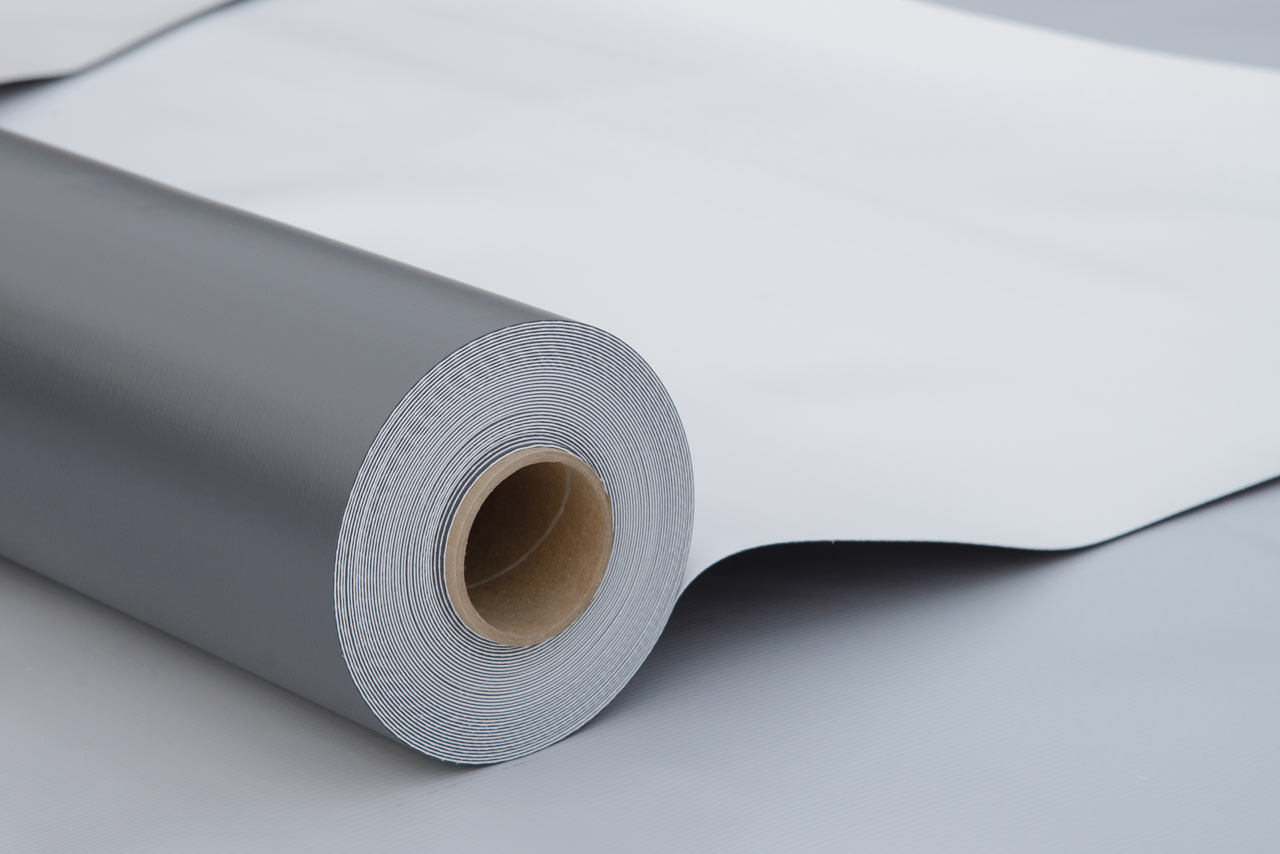
PVC Roofing
Documented roof planning for pvc roofing across Las Vegas commercial facilities.
PVC Specifications — 50-mil vs. 60-mil in Las Vegas Conditions
50-mil PVC carries a 15-year or 20-year NDL warranty on qualifying assemblies and is acceptable for light commercial applications without significant chemical or foot-traffic exposure. In Las Vegas, the 50-mil specification is rarely appropriate for any roof that will see meaningful rooftop activity — the foot traffic from kitchen staff accessing rooftop grease traps, HVAC technicians servicing resort mechanical equipment, and communications staff servicing antenna arrays creates puncture risk that 60-mil handles measurably better.
60-mil PVC is our standard specification for Las Vegas restaurant, resort, and chemical-exposure industrial applications. It qualifies for 20-year NDL warranties from most manufacturers and for 25-year NDL programs from qualifying manufacturers on properly specified assemblies. The additional material cost over 50-mil is a small fraction of total installed project cost. In a high-exposure Las Vegas environment, specifying 50-mil to save material cost on a 20,000 sq ft restaurant roof is a poor capital decision.
Heat-welded seams on PVC produce a monolithic seam zone that is stronger than the parent membrane when properly executed. This matters in Las Vegas because the seams are the first failure location under thermal cycling and UV stress on any single-ply membrane. A properly heat-welded PVC seam does not debond from grease exhaust chemistry contact the way EPDM adhesive seams do and does not oxidize under UV exposure the way aging TPO weld edges can.
Las Vegas Resort Corridor and Restaurant Applications
The resort casino corridor — Las Vegas Boulevard and the surrounding resort campuses — generates roofing chemical exposure conditions that are unlike those found in any standard commercial market. A single large resort property may have a 500-seat buffet kitchen, a dozen restaurant outlets, a convention center with a high-volume catering kitchen, multiple pool deck bar operations, and mechanical penthouse cooling towers running water treatment chemicals year-round. The rooftop above and adjacent to these operations receives a continuous chemical load that is the most demanding exposure profile in North American commercial roofing.
We specify PVC on resort kitchen exhaust and cooling tower zones as the default, with the chemical exposure profile documented in the specification package. For resort properties where the rooftop is divided into zones with different exposure profiles — a clean office wing adjacent to a kitchen exhaust zone, for example — we write zone-specific membrane specifications rather than defaulting to PVC across the entire roof. Applying PVC on a clean-exposure section where TPO would perform equally well is a cost without a corresponding benefit.
Free-standing restaurant buildings and restaurant strip centers on the Las Vegas commercial corridors — Flamingo Road, Tropicana Avenue, Spring Mountain Road, Maryland Parkway — represent a volume PVC roofing market. Many of these buildings were originally roofed in TPO or EPDM that has degraded from kitchen exhaust exposure. We assess existing membrane condition and chemical degradation before writing a replacement scope, and document the exposure profile to support the PVC specification.
PVC Installation on Occupied Las Vegas Properties
PVC installation is a heat-welding process — no open flame, no hot-applied materials. This matters in Las Vegas for two reasons. First, resort and casino properties with occupied spaces below the work area have restrictions on odor-generating and open-flame operations that PVC installation does not trigger. Second, Clark County's hot-work permit requirements for torch-applied processes add pre-construction lead time that PVC does not require.
For occupied restaurant buildings, we schedule membrane work in early-morning windows to minimize conflict with kitchen operations and to keep ambient surface temperatures below the manufacturer's recommended application ceiling. Las Vegas restaurant rooftops at midday in July are not workable PVC installation environments — we plan around this from the project scheduling stage rather than discovering it on the first day of production.
Frequently asked questions
Is PVC significantly more expensive than TPO or EPDM?
PVC material cost runs 10–20% above comparable-thickness TPO per square foot. On a 20,000 sq ft project, the material premium is typically $4,000–$8,000. On a Las Vegas restaurant or resort kitchen exhaust building where TPO delivers 10–12 years of effective service life versus 25 years on a properly warranted PVC system, the PVC lifecycle cost is lower. We present the lifecycle cost comparison in the written scope, not just the initial installed cost.
Can PVC be installed on a Las Vegas restaurant during operating hours?
Generally no for membrane welding during peak service hours — the hot-air welding equipment produces sound levels and activity that conflict with normal restaurant operations. We schedule restaurant roof work in morning production windows before lunch service and coordinate with the kitchen manager on any exhaust system shutdown windows during direct-overhead work. Buildings with overnight closing windows are the most efficient to schedule. We review the schedule with the building operator before contract signing.
What does the 25-year PVC warranty actually cover?
A 25-year NDL warranty from a qualifying manufacturer covers material and labor costs to repair or replace warranted system components that fail due to manufacturing defect or installation deficiency within 25 years of the warranty issuance date. It does not cover damage from unauthorized roof penetrations, building modifications that affect the roof assembly, or failure to maintain per the warranty's documented inspection requirements. We close out every PVC project with the manufacturer's field inspection and warranty issuance, and include the warranty document in the building's closeout package.