
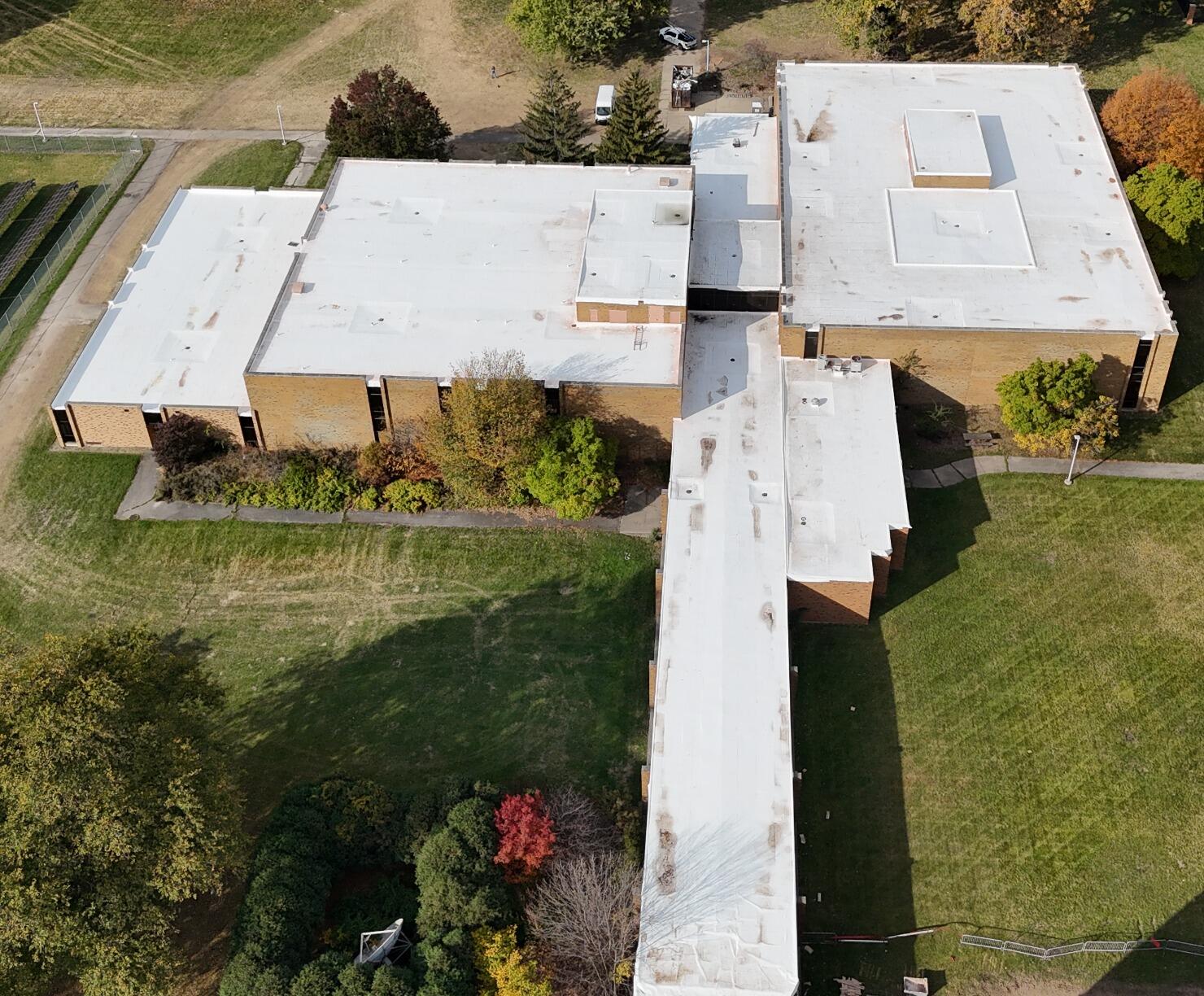
School and K-12 Educational Building Roofing in Las Vegas, NV
Commercial roofing for public and private schools, K-12 campuses, and educational facilities throughout Las Vegas, NV.
Clark County School District, the fifth-largest school district in the United States with more than 300,000 students across the Las Vegas Valley, represents one of the most significant commercial roofing markets in the western United States. CCSD operates hundreds of school buildings ranging from older mid-century campuses in the city's established neighborhoods to brand-new schools built during the valley's explosive recent growth in Summerlin, Henderson, and North Las Vegas. Managing roofing capital needs across a portfolio of this scale — in one of the most extreme roofing environments on the continent — requires a systematic approach to asset management, contractor qualification, and design specification that distinguishes CCSD's facilities program from smaller, less sophisticated school district clients.
Nevada's extreme high desert climate is the defining design parameter for CCSD school roofing. Las Vegas Valley temperatures exceed 115°F in summer, and rooftop surface temperatures on dark-colored low-slope membranes can reach 185°F to 195°F during July and August afternoons. This extreme heat loading degrades roofing materials at an accelerated rate, making white reflective membranes — TPO or PVC — the only defensible specification choice for new and re-roofing work at CCSD schools. UV radiation in the Las Vegas desert is among the most intense in North America, and membrane products must be specified with documented UV stability data demonstrating long-term performance in high-UV, high-temperature environments rather than standard ASTM weathering tests designed for milder conditions.
Summer scheduling for Clark County schools presents an unusual dynamic compared to most school districts. CCSD operates some campuses on a year-round calendar, which reduces or eliminates the summer construction window at those specific schools. For traditional-calendar schools, the summer window from mid-June through early August provides approximately 8 weeks for major roofing work. Las Vegas's summer heat creates worker safety risks that shorten the daily productive work window: roofing work in Las Vegas is typically scheduled from 5:00 or 5:30 a.m. through 11:30 a.m. or noon during peak summer, avoiding the most dangerous afternoon heat. Nevada OSHA's heat illness prevention regulations govern contractor obligations on Las Vegas job sites.
Nevada's prevailing wage law — administered by the Nevada Labor Commissioner's Office — applies to public school construction contracts in Clark County above the applicable threshold. Prevailing wage rates for Clark County roofing trades are published by the Labor Commissioner and must be paid to all journeymen, foremen, and apprentices on covered projects. CCSD's contract managers monitor certified payroll compliance actively, and contractors who fall behind on certified payroll submissions find that payment applications are held until compliance is restored. Maintaining a disciplined certified payroll submission system from the first day of work is the most effective way to ensure smooth billing and payment throughout a CCSD project.
Clark County School District's capital improvement program is funded through general obligation bonds approved by Clark County voters — one of the largest school bond programs in the nation in absolute dollar terms. The district publishes multi-year capital improvement plans and manages a large, professionally staffed Facilities Division that evaluates contractor qualifications rigorously. Contractors seeking to work with CCSD must demonstrate financial stability, relevant comparable experience, a strong safety record, and the organizational capacity to execute large-scale school projects. CCSD's prequalification process is thorough and competitive, and contractors who invest in building a strong qualification package — with detailed project references, audited financial statements, and EMR documentation — access a client with enormous roofing project volume.
CCSD's institutional roofing specifications reflect the district's need for maximum durability in an extreme environment. Fully adhered or mechanically attached white TPO or PVC membranes over tapered polyisocyanurate insulation are the standard system types. The tapered insulation system is critical in the Las Vegas desert, where flat roofs without positive slope accumulate fine desert dust that can clog drains during rare intense rainfall events from monsoonal moisture. Penetration flashings must be detailed for durability in the thermal cycling environment, with flexible sealants specified for the Las Vegas temperature range and expansion accommodations built into long seam runs on large flat-roof sections.
Nevada contractor licensing through the Nevada State Contractors Board is a prerequisite for any work at CCSD. The NSCB classifies roofing as a specialty contractor category requiring specific licensing. Contractors must hold a current, active Nevada C-15 (Roofing Contractors) license before bidding on CCSD projects. The NSCB license status is easily verified through the board's public online database, and CCSD procurement staff verify license currency as a bid qualification requirement. Unlicensed contractors cannot legally obtain permits in Nevada, which would prevent the project from proceeding and expose the district to significant liability.
Energy code compliance is a meaningful factor in CCSD school re-roofing specifications. Nevada's energy code establishes minimum insulation R-values for re-roofing projects in the hot desert climate zone. However, the Las Vegas heat environment actually makes exceeding minimum insulation requirements less financially compelling than in heating-dominated climates, because the primary energy savings from added insulation are in reduced cooling load — and cooling systems in Las Vegas operate for so many hours per year that the savings can still be substantial. A contractor who can quantify the expected cooling energy savings from increased insulation provides the district's energy management team with useful data for evaluating insulation upgrade options.
Post-installation maintenance for CCSD school roofs in the Las Vegas desert requires specific attention to desert-environment vulnerabilities. Quarterly drain cleaning is a minimum recommended frequency given the fine desert dust that accumulates continuously and can clog primary drains rapidly when rare rainfall events occur. Annual inspection of seam integrity and flashing sealant condition is warranted given the thermal cycling stress that Las Vegas roofs experience. Wind events that channel through the surrounding mountain passes can disturb edge metal and perimeter flashings, and a post-wind inspection is advisable after any event that produces reported damage in the area. Documenting all inspections and repairs provides the maintenance record that CCSD's asset management system requires.
Frequently asked questions
Is built-up roofing still installed new on Las Vegas commercial buildings?
Essentially no. New hot-asphalt BUR installation has been displaced in the Las Vegas market by single-ply membranes and fluid-applied systems that perform better in the Mojave Desert's temperature range and are more practical to install at 100°F+ ambient temperatures. We can specify and install BUR where a building's situation specifically requires it, but for virtually every Las Vegas commercial replacement or new installation, TPO, PVC, or silicone restoration is the honest recommendation.
My Las Vegas building has a gravel-surfaced BUR that has been patched repeatedly. Is it salvageable?
Possibly — but the condition of the plies beneath the gravel cap determines that answer, not the surface appearance or the patch history. A BUR that has been repeatedly patched at flashings or isolated field failures can still have dry, structurally sound plies across most of its area. Core cuts at representative locations will show whether the insulation is dry and the plies are intact. If the cores come back clean, a recover or coating system may extend the asset significantly. If the plies are saturated or delaminated, patching history is irrelevant — replacement is the scope.
How do you handle gravel removal during BUR tear-off on a Las Vegas building?
Gravel-surfaced BUR tear-off generates significant debris volume and requires rooftop vacuum equipment on buildings where waste disposal access is constrained — the resort corridor, downtown Las Vegas, and buildings with limited dumpster staging. We include gravel removal logistics in the pre-construction mobilization plan and coordinate disposal. The gravel is collected separately from membrane debris and can be directed to aggregate recycling facilities where the owner's sustainability program requires documented disposal.
Aging BUR on a Las Vegas commercial building?
We will walk the roof, pull core cuts, and produce a written assessment — replace or recover, with system options, installed cost estimates, and warranty paths appropriate to the Las Vegas market.
Ready to talk through a roof?
Tell us about the building and the roof problem. We'll document it and put a plan in writing — no pressure, no boilerplate.
Let's connect →