Silicone Roof Coating
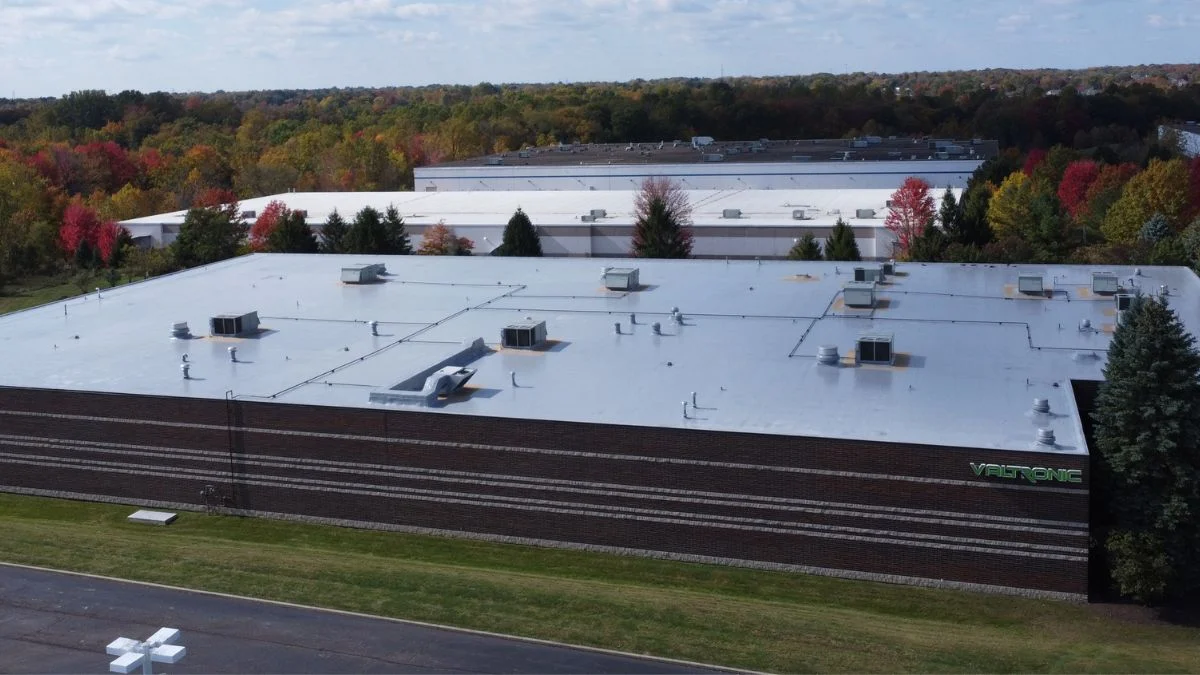
Documented roof planning for silicone roof coating across Las Vegas commercial facilities.
Why Silicone Dominates Las Vegas Commercial Restoration
The chemistry of silicone makes it well-suited to the Mojave Desert's operating conditions in ways that competing coating chemistries are not. Acrylic coatings — the primary alternative in temperate markets — soften and flow at surface temperatures above 130°F, making them unreliable on Las Vegas roofs that regularly reach 150-175°F in July. Silicone maintains its physical properties across the full temperature range the Las Vegas climate produces, from sub-freezing winter nights to peak summer surface temperatures. It also retains flexibility at low temperatures in ways that some bituminous products do not, which matters during the occasional hard-freeze events Clark County records each winter.
Silicone's UV stability is the other climate-specific advantage. The UV Index 10+ that Las Vegas records year-round degrades acrylic and polyurethane coating chemistries faster than their temperate-market performance projections. Silicone's inorganic chemistry is not susceptible to UV oxidation — the silicone-oxygen bond at the core of the polymer does not break down under UV exposure the way carbon-based polymers do. A silicone system installed in Las Vegas performs against UV the same way on day 3,000 as it did on day 1, which is not true of coating systems that rely on UV stabilizer packages that deplete over time.
The pool of qualifying Las Vegas commercial roofs is large and actively growing. Single-ply TPO systems installed during the 2000s-2010s commercial buildout across Summerlin, Henderson, and the North Las Vegas industrial corridors are now 15-25 years old. The buildings where those membranes held up under Las Vegas's climate — retaining sound adhesion and dry insulation — qualify for silicone restoration rather than full replacement. We can tell a building owner where their specific roof falls in that qualification window from a single inspection visit.
Substrate Qualification — What Qualifies and What Doesn't
A Las Vegas commercial roof qualifies for silicone restoration when three conditions are met: the insulation is dry at representative core-sample locations, the existing membrane has intact adhesion with no open seams or significant delamination, and the deck is structurally sound. Buildings meeting all three criteria can typically avoid full tear-off and extend their roof's warranty life at 50-60% of replacement cost.
The most common qualifying substrates on Las Vegas commercial buildings are: TPO that is 10-20 years old and still in sound membrane condition; modified bitumen cap sheet with intact surface; and spray polyurethane foam that is due for re-coating at its scheduled interval. BUR surfaces can qualify with the right primer and base coat, but the substrate variability on aging Las Vegas BUR is higher and our core-sampling threshold for qualifying BUR is more conservative — we look for dry plies with intact bond at every core location before proceeding.
The qualification process is not a formality. Las Vegas monsoon events create insulation saturation scenarios that surface inspection cannot identify — a membrane with no visible blistering or surface anomaly can have monsoon-infiltrated wet insulation beneath it from a slow flashing failure. We pull moisture cores at a density of one per 5,000 sq ft minimum, with additional cores near any previously reported leak locations, before presenting a coating recommendation. The warranty inspection will find wet insulation if it exists, and a failed warranty inspection is worse for the owner than a properly scoped replacement.
Application and Warranty Paths in Las Vegas Conditions
Substrate preparation for Las Vegas silicone applications has two climate-specific complications. First, we schedule coating immediately after pressure washing — Las Vegas's UV intensity degrades a washed membrane surface faster than in temperate markets if the surface is left exposed between wash and coat. Second, Las Vegas's low average humidity (typically 10-20% relative humidity outside monsoon season) is actually an application advantage: silicone cures by absorbing atmospheric moisture, and while high humidity accelerates cure to the point of blistering in humid markets, Las Vegas's dry air produces a steady, predictable cure rate. Monsoon-season application requires humidity monitoring — atmospheric moisture above 80% relative humidity, common during afternoon monsoon conditions, can affect open-time and adhesion on some systems.
Three warranty paths are available on Las Vegas silicone projects. The 10-year path applies a minimum 20-wet-mil dry-film thickness in two passes — adequate for buildings with 10-15 year capital horizons seeking to defer replacement. The 15-year path applies 25-30 dry-mil with reinforcing fabric at flashings and seams, which meaningfully changes the warranty terms at the penetration-heavy rooftops common on Las Vegas HVAC-intensive commercial buildings. The 20-year path applies 30-35 dry-mil in three passes with full fabric at all seams and flashings — the maximum warranty path available and the one that produces the lowest lifecycle cost per year on buildings with longer capital horizons.
One long-term advantage that is particularly relevant to the Las Vegas owner: a properly applied silicone system can be recoated at the end of its warranty term — typically a 10-15 mil recoat pass over the existing silicone — renewing the warranty at a fraction of original installation cost. This is the path that makes silicone restoration compelling on a 20-30 year capital horizon on qualifying buildings, because it defers tear-off indefinitely as long as the insulation remains dry and the substrate remains sound.
Frequently asked questions
How do I know if my Las Vegas commercial roof qualifies for silicone coating?
We walk the roof, pull moisture cores at representative locations, and inspect the membrane for open seams, delamination, and flashing condition. The inspection typically takes 2-3 hours on a 50,000 sq ft building. We produce a written assessment: qualifies with substrate conditions documented, or does not qualify with the replacement recommendation and the findings that rule out coating. There is no charge for the inspection on buildings where we have a reasonable shot at earning the project.
Is silicone coating compliant with Nevada's cool-roof energy code?
Yes. A white silicone fluid-applied coating achieves Solar Reflectance Index values above 90 — well above Nevada's ASHRAE 90.1-2019 SRI minimum for low-slope commercial roofs. We document SRI compliance in the project specification and include it in the permit and closeout files. For existing buildings that are out of compliance with current energy code on their original dark membrane, a silicone restore is often the most cost-effective path to bringing the roof assembly into compliance.
Can silicone coating handle the Las Vegas monsoon season?
Yes. Silicone's water resistance — including resistance to standing water, which silicone tolerates indefinitely without degradation — is one of its primary advantages in the Las Vegas market. Post-monsoon ponding that damages or stains acrylic coatings has no material effect on silicone. The seamless application eliminates the seam failures that single-ply membranes experience at ponding perimeters during and after monsoon events. A 20-year silicone system is specifically appropriate for Las Vegas roofs with ponding history that would otherwise require full re-sloping.
Wondering if your Las Vegas commercial roof qualifies for silicone restoration?
We will walk the roof, pull moisture cores, and produce a written substrate assessment — with coating warranty paths and installed cost estimates for the Las Vegas market, or an honest replacement recommendation if coating is not the right scope.