
Roof Service Agreements
A season-matched service program for Las Vegas commercial roofs: two scheduled visits a year, each with a specific job to do.
A year on a Las Vegas roof, visit by visit
On paper a roof service agreement is simple: two scheduled visits per year, a written report after each one, and priority response in between. What makes it worth signing is what each visit actually accomplishes — because the desert calendar hands each one a different job. A membrane out here does not age the way it does in a mild climate. It bakes through four months of triple-digit heat, moves through a 30-to-45 degree temperature swing every single day, and then gets hit with monsoon cells that can drop more than an inch of rain in under an hour. The agreement puts a technician on the roof at the two moments in that cycle where an hour of work buys the most protection.
The early-summer visit: clearing the deck before monsoon
We schedule the first visit in May or June, before the first monsoon cell forms. Drainage comes first — every drain strainer, scupper, and overflow gets cleared and flow-checked, because a blocked scupper during a July storm is how a roof ends up holding a swimming pool it was never engineered to carry. Then the water path itself: field seams get walked and probed, pitch pans topped off, sealant renewed at terminations and counterflashings, and pipe boots inspected at the collar where UV splits start. Last, everything mechanical gets a shake test — loose equipment panels, unsecured satellite mounts, and abandoned sleepers become projectiles in a 60 mph gust front, and they punch holes in membranes on the way out.
The fall visit: repairing what the heat did
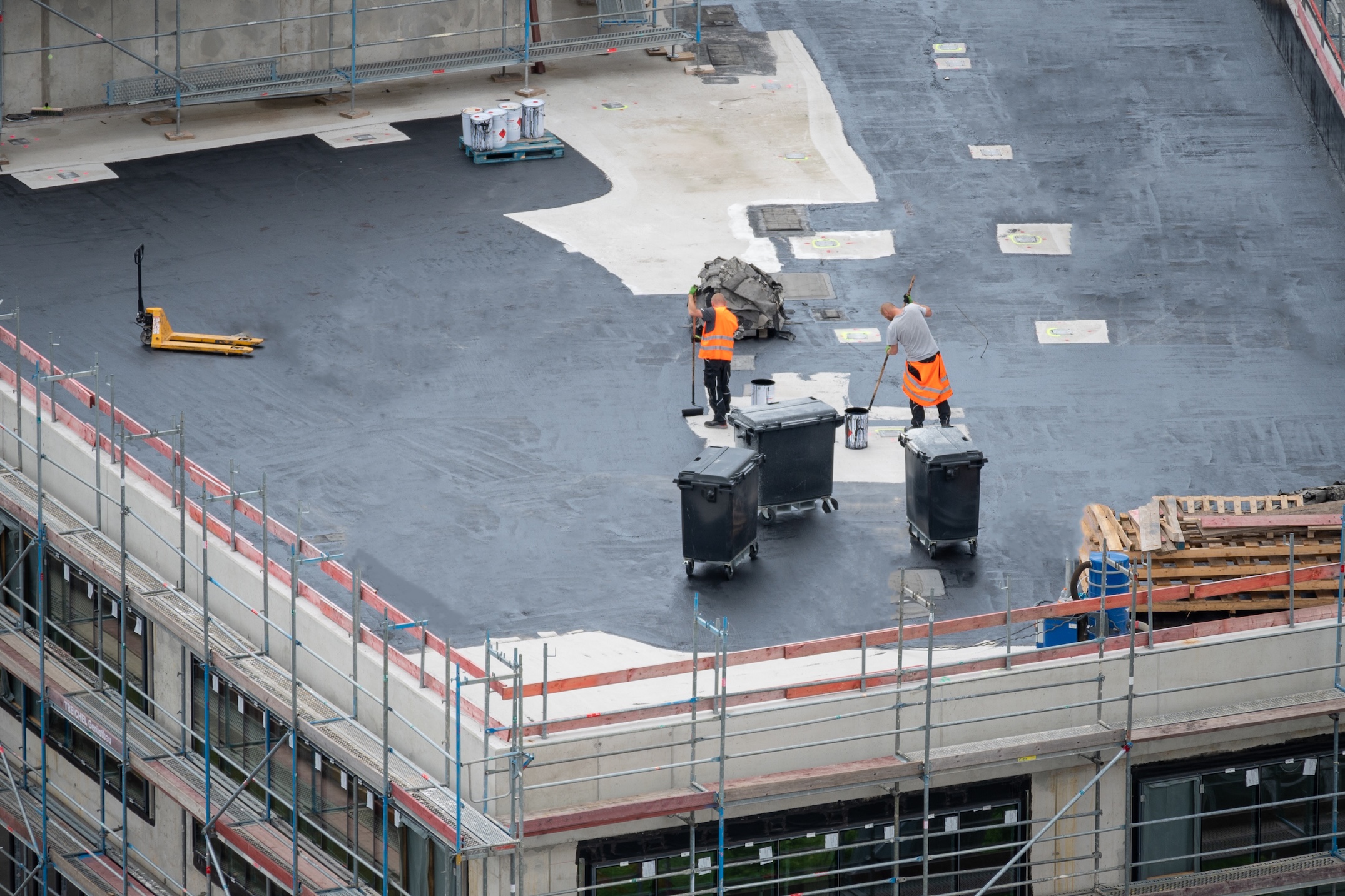
The second visit lands in October or November, after the heat breaks. This is the repair pass. A summer of expansion and contraction works fasteners loose, opens welds at curb corners, and turns flexible sealant chalky and brittle — so the technician probes the seams that moved, rewelds or patches what opened, recaulks what dried out, and patches the scuffs left by a season of AC service traffic. There is a materials reason for the timing too: sealants and adhesives cure to spec on a 75-degree deck in a way they simply cannot on a 160-degree one. Work done in the fall window holds through the following summer; the same work done in July often has to be done twice.
Between visits: the report and the phone number
Each visit closes with a photo report within days: what we found, what we fixed on the spot, what we are watching, and what deserves a line in next year's budget. Over a few cycles those reports become a condition history that satisfies a manufacturer warranty desk — most warranties expect documented maintenance — and tells you years in advance when the membrane is approaching a coating or replacement decision. Between visits, agreement holders get priority dispatch. When a monsoon cell tracks across the valley and the calls stack up, roofs under agreement get climbed first, with their history already in hand.
The buildings this rhythm fits
The program earns its keep fastest on roofs with heavy equipment traffic: strip retail with a tenant HVAC unit every forty feet, restaurants with grease exhaust, medical and office buildings where interior finishes make any leak expensive. Industrial boxes along I-15, through North Las Vegas, and out toward Apex are simpler roofs but bigger ones, where a single missed drain can pond a thousand square feet. If the building matters to your operation, the two-visit rhythm fits it.
Ask us to price an agreement for your building. We walk the roof first and quote from its actual condition — call (702) 820-5349 or send the roof details below.
Service Agreement Questions
When do the two visits happen each year?
The first is scheduled for May or June, ahead of monsoon season; the second for October or November, once surface temperatures drop into the range where repairs cure properly. We set both dates at signing and confirm each one a week out.
Is a coated or silicone roof eligible for an agreement?
Yes, and it should be on one. Coating warranties depend on the membrane staying clean at drains and details, and small coating repairs are fast and cheap when caught early. The visit checklist adjusts to the system — adhesion checks and mil-thickness spot readings replace weld probing.
What happens if a storm damages the roof between visits?
Call the same number. Agreement holders are dispatched ahead of the general queue, and because we already hold your roof's photos and condition notes, the crew arrives knowing the drainage layout and the weak points instead of learning the roof during an emergency.
Will the same technician handle each visit?
We assign a lead technician to the account and keep that assignment as long as staffing allows. Continuity matters on a service roof — the tech who noticed a soft spot in June is the one who checks whether it grew by November.